Labour / Le Travail
Issue 95 (2025)
Obituary / Nécrologie
Remembering Joy Parr (1949–2024)
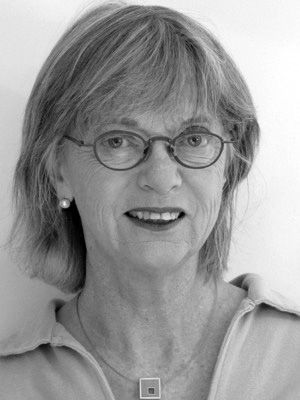
Joy Parr was one of our most revered Canadian historians. Her website lists the many universities at which she taught: Yale, ubc, Queen’s, Simon Fraser, and Western. Her multi-paged list of awards is breathtaking; from the Hilda Neatby Prize in 1987 (which she won multiple times) to the Leonardo da Vinci Medal in 2018, I counted 30 separate distinctions, which must be a national record. Terry Crowley’s superb biographical website sketch describes the vast panorama of Joy’s research, encompassing women’s history, labour history, immigration history, social history, environmental history, family history, material history, and economic history. Her ambitious array of topics included women, children, gender, immigration, consumerism, technological change, textiles, and furniture-making. Her Megaprojects New Media series offered innovative and visually creative ways to explore engineering history.
I was one of the Canadian historians who followed Joy’s brilliant career with admiration and awe for many decades. I would be remiss if I did not add that I was also one of countless historians who benefitted from her personal mentorship and guidance. I shall never forget that when I published my first academic article in 1981 on the legal history of child custody, I received a handwritten note from Joy, congratulating me on the publication and encouraging me to continue to write about women’s legal history. I was a brand-new law professor, tentatively putting one toe into the academic world of writing, and it felt so wonderful to read those reassuring and generous words. I and many others continued to benefit from her enthusiastic support, thoughtful advice, and wise counsel over the full course of our careers. I was so fortunate to be able to meet with Joy often to talk about our ongoing research, often at conferences and occasionally at my home in London. She was always available for consultation. She encouraged us to become involved in academic peer groups, she served as a referee for our tenure and promotion, and she nominated us for prizes. This was a woman at the pinnacle of her profession who took endless time to support colleagues in ways that mattered enormously.
Her contributions to Canadian history are singular and lasting. We are all richer for having had her in our midst.
Joy Parr grappled with big questions by drawing our attention to the small. She put children at the centre of political economy and migration, visited small towns to understand gender and labour relations, spoke to housewives about budgeting to understand postwar economic systems, and reminded us why people affected by megaprojects matter. A deep commitment to feminist politics and social, economic, and political justice guided her historical inquiry. Developing reciprocal relationships with people and places was central to her ethical research practice.
Joy taught me the importance of making connection to the places we study – something that is especially important when doing research in small communities. When I made my first research trip to Thunder Bay and Kenora for my doctoral dissertation, she advised me to “be there.” This meant going to performances, markets, political talks, and other public events. Being there also meant staying for long enough to get to know the place. She recalled that some people had criticized her decision to stay in the Ontario towns Paris and Hanover during the summer terms when she did her research for The Gender of Breadwinners (1990). This was probably because they thought it would cloud her “objectivity.” It was important to be there so the community would know she cared. She also told me there was a diner in Paris that made very good lemon pie, which helped pass time.
The Gender of Breadwinners changed how I thought about history, but Domestic Goods (1999) is my favourite of Joy’s books. Putting the mundane and homely things that women used to care for their families at the centre of postwar economic history made me rethink women’s various roles in political and social change. I was one of the first people to see the book. Joy had invited me to dinner with her husband, Greg Levine, before my first research trip to northwestern Ontario. After we discussed my research plan, she opened a box from the University of Toronto Press that she had recently received. She explained the politics of the cover art and fretted that a white book might get dirty, but it had been a required design decision. She was giddy. She said something like, “You think I’m being silly.” I responded that I couldn’t even imagine what it would be like to get that box of books with my name on it, and I think about her every time I open a box from the publisher. I share this story here because I’ve always been struck by how a prominent scholar who has had such a lasting, transformative impact in so many fields never lost her humility.
Joy was a rigorous adviser, because, as feminist scholars know, we must be. But more importantly, she was a caring adviser who paid attention. She followed her students’ careers and supported them. In the second year of my doctoral studies, she took me to a play written by Monda Halpern. (Joy brought friends and students to every performance of the Vancouver run so Monda could report good audience turnout in future arts council applications!) She was wearing a great hat, and I commented on it. Of course there was a political story behind it. She had been a visiting fellow at All Souls College with Jane Lewis, who, along with her women’s studies cohort, wore the hat to make her presence visible in a very masculine space. After my defence, we went for a drink. Joy, who had recently visited All Souls, put a paper bag from Oxford on the table. I still wear that hat today.
How to cite:
Constance Backhouse and Nancy Janovicek, “Remembering Joy Parr (1949–2024),” Labour/Le Travail 95 (Spring 2025): 11–13, https://doi.org/10.52975/llt.2025v95.003.
Copyright © 2025 by the Canadian Committee on Labour History. All rights reserved.
Tous droits réservés, © « le Comité canadien sur l’histoire du travail », 2025.