Labour / Le Travail
Issue 95 (2025)
Article
A Social Gospel Experiment: C. S. Eby’s People’s Institute in Early 20th-Century Toronto
Abstract: In 1909, an atypical church emerged in Toronto’s industrial core, the “People’s Institute,” which closed its doors less than two years later. Helmed by missionary C. S. Eby, the People’s Institute was an experiment designed to encourage political involvement and spread a Christian anti-capitalist ethic. This article situates the People’s Institute in the changing landscape of 1909 Toronto and within the larger trends of the labour church and the social gospel. It also argues that Eby’s experiment serves as an example of broader obstacles that prevented the long-term flourishing of left-wing approaches to Christianity in Canada.
Keywords: religion; Christianity; working class; social gospel; labour church; Charles Samuel Eby; Toronto; microhistory
Résumé : En 1909, une église atypique a vu le jour dans le centre industriel de Toronto, le « People’s Institute », qui a fermé ses portes moins de deux ans plus tard. Dirigé par le missionnaire C. S. Eby, le People’s Institute était une expérience destinée à encourager l’engagement politique et à diffuser une éthique chrétienne anticapitaliste. Cet article situe le People’s Institute dans le paysage changeant de Toronto en 1909 et dans les tendances plus larges de l’église ouvrière et de l’évangile social. Il soutient également que l’expérience d’Eby sert d’exemple des obstacles plus vastes qui ont empêché l’épanouissement à long terme des approches de gauche du christianisme au Canada.
Mots clefs : religion; chrétienté; classe ouvrière; évangile social; église ouvrière; Charles Samuel Eby; Toronto; microhistoire
A group of over 1,000 unemployed men, a smattering of reporters, and a gaggle of onlookers gathered in Toronto’s Grange Park on 20 January 1909. The men were former inmates of the Toronto House of Industry, an institution that controlled the unemployed by allowing them to exchange a day’s labour for thin soup and a hard mattress. The men complained of inhumane conditions in the House of Industry. Those who took up the soapbox were widely dismissed by the watchful reporters as cranks, including the socialist poet Wilfrid Gribble and union organizer Ernest Drury. The most disparate figure to speak out was a Methodist preacher, Rev. Dr. Charles Samuel Eby. Eby’s speech, repeatedly interrupted by applause, “roused the crowd to enthusiasm,” according to a reporter on the scene.1 Eby compared the workers’ situation to that of Jesus and asserted that God willed humans to create a just society on earth. Having spent his career in Manitoba and as a Methodist missionary in Japan, Eby was newly arrived in Toronto, yet he was able to offer the protestors the use of his church’s building at 88 College Street; formerly known as Zion Congregational Church, Eby had dubbed it the “People’s Institute.”2 Sources referring to what, exactly, this People’s Institute did and was have become scattered, but they hint at a short-lived experiment in religious and political organization that illustrates the possibilities and limits of what left-wing church projects could accomplish in early 20th-century Canada.
Eby thus first gained public attention as a “preacher to the unemployed,” and because of this reputation, he and the People’s Institute have appeared peripherally in a few historical narratives. Richard Allen’s seminal work on the social gospel movement labels Eby an intellectual and theologically liberal writer. His church is identified in Ian McKay’s work on Canada’s leftists as a radical example of the social gospel’s left wing. Gaétan Héroux, Bryan Palmer, and David Thompson recount the above-described unemployment protest, including Eby’s involvement.3 Yet these works describe the Institute inconsistently; sometimes it is referred to as a revolutionary church and sometimes as a liberal missionary’s pet project. The former description is closer to what can be discerned of the aims of the church, yet a close analysis of the church’s story demonstrates the difficulty – perhaps the impossibility – of sustaining an avowedly anti-capitalist church under the conditions of capitalism.
In The Making of the English Working Class, E. P. Thompson objects to histories that remember only the ancestors of currently significant political movements or institutions; in these, “the blind alleys, the lost causes, and the losers themselves are forgotten.”4 The history of the losers was especially significant to Thompson because he was chronicling the great changes in class identity during a long era of upheaval that brought England into a new social order, provoking working people to a variety of economic, religious, and political strategies in reaction to the scale of change. The profusion of responses to change in that era meant that many of the resulting movements, ideologies, and religious groups did not lead to long-term institutional descendants. Eby’s church in 1909 and 1910 was, analogously, self-consciously situated in the middle of a wave of urbanization and social change sweeping Toronto. This wave provoked a variety of religious responses, including those that persisted only briefly, such as Eby’s socialist church.
In attempting to examine one of Thompson’s “losers of history,” this article will situate Eby’s project among the changing world of working-class churches, the social gospel movement, and labour churches in Toronto. In so doing, it reveals some of the challenges that explicitly left-wing forms of Christianity faced in the decade before World War I – challenges that appear to have been common to several projects similar to Eby’s and that indicate why the People’s Institute and experiments like it perished while other types of church innovation survived. While Eby’s beliefs reflected the left wing of a larger wave of Christian social reform, the People’s Institute failed because of a lack of institutional support. Similar efforts across Canada faced comparable hurdles. Ultimately, it appears that self-consciously left-wing churches failed not as a result of a lack of interest in religion among working-class people but due to the difficulties of funding a project that did not fit into traditional church structures or labour movements.
Still, while its story resembles those of a number of other initiatives, the People’s Institute was unique. It was the product of a distinctive combination: the arrival of a theologically radical leader in a city undergoing rapid social transformation. The story of the Institute involves a particular man – Charles Eby – in a particular milieu – the growing city of Toronto – where his ideas attracted the followers who formed the Institute but who lacked the resources to sustain it.
C. S. Eby and the Ideology of the People’s Institute
Charles Samuel Eby’s path to the soapbox in 1909 Toronto was not an obvious one, though he was not alone among religious leaders in becoming more politically engaged in response to the circumstances of early 20th-century Canada. Responding to a perceived social crisis, the tradition of late 19th-century Christian reform, which concentrated on issues like temperance and formation of charitable institutions, gradually shifted into a more explicitly political form of critique that proposed more important changes to the role of the church. The result is known as the “social gospel,” a new theology and political vocabulary used to argue that the church must take on a more active role in political life.5 Richard Allen, Melissa Turkstra, Lynne Marks, and David Marshall, among other historians, have all identified that Christian leaders used this vocabulary to respond to economic change and to new developments in theology and science by seeking a “new Christianity” suited to the modern condition.6
The language of the social gospel and of Christian reform more broadly was employed by Eby’s contemporaries to describe a variety of causes from the centre-right to the radical left. For some ministers – notably, Congregationalist labour advocate W. E. Gilroy, Methodist-turned-Communist A. E. Smith, and Co-operative Commonwealth Federation co-founder J. S. Woodsworth – this theology provided a bridge between conventional Christianity and left-wing politics, and their doctrinal and political priorities shifted over time.7 For labour leaders, historians Melissa Turkstra and Christo Aivalis argue, the social gospel provided a rhetorical repertoire for moral and political critique that endured for decades.8 For future prime minister Mackenzie King and others, the language of heaven and regeneration led to a conservative social outlook based on “social peace” between classes, moderated by an interventionist government.9 Given how central Eby was to the People’s Institute, situating his ideas within this social gospel spectrum gives some indication of the Institute’s ideological character.
Born in Paris, Ontario, in 1845, Eby seems to have been a precocious and particularly spiritual child. He experienced a personal conversion at a Methodist camp meeting at age eleven and had enrolled in college and become a teacher before age eighteen.10 After graduation, he taught for only a short time before accepting long-term posts as a missionary, first domestically with the Methodist German church and then with a larger Methodist denomination in Japan from 1878 to 1896. As co-founder of the Methodist mission in Kofu, Japan, Eby aimed to attract educated and influential Japanese people to his mission, with the hope that they would further spread the faith to the rest of the population. To this end, he adopted “scientific” language to describe Christian ideas to this sophisticated audience.
Returning to Canada in his early 50s, Eby had already published two books aimed at fellow missionaries and a series of lectures he had delivered in Japan, which exposit a version of the gospel tailored to his Japanese audience. Evangelization, he argued, required that educated and intelligent Japanese people be presented with Christian ideas in a modern, logical form, which meant emphasizing personal spiritual experience over dogma, and focusing on the “moral system” of Christian ethics.11 In his series of lectures for Japanese youth titled “Christianity and Humanity,” Eby defined civilization as an organic balance of many parts, ultimately guided by the “principles which actuate and control the individual character.”12 For Eby, a good society required good individuals; neither bad personal character nor the “gloominess,” “reclusiveness,” and “cynicism” of irreligious people could create an ideal society.13
After returning from Japan to Canada – first to Vancouver and then southern Ontario – Eby wrote another book, which indicated a shift in his politics. In Sermon on the Mount: The Charter of the Kingdom, he attempted to translate the idea of the Kingdom of God and Christian ethics into a small-s socialist politics.14 Shaped around a set of laws derived from the Sermon on the Mount, the Ten Commandments, and Gospel verses attributed to Jesus, the book argued that Christianity had become lost by concentrating on a vision of individual “escape from an Earth doomed to destruction” instead of a collective struggle to bring about God’s will on earth. Not unlike Salem Bland’s New Christianity, Eby’s Sermon on the Mount emphasizes that religion need not focus on the supernatural but rather functions as a rational moral guide, and that focus on the supernatural or dogma is a pollution in the church.15
Eby argued that the Sermon on the Mount was in fact about how humans could perfect themselves and attain a better society. This was consistent with Eby’s earlier focus on individual moral transformation but also directed its critique at larger economic systems, railing against the current financial system and accumulation of wealth. Eby sought to rally the faithful against “evil,” which meant fighting for a “material economy of the earth as shaped after the law of heaven.”16 Written in the form of a sermon and not a work of political economy, the book does not explain how Eby envisioned this “material economy” or how it would be achieved, but it seems Eby was becoming more explicitly radical after his return to Canada than he had been during his missionary career while maintaining his evangelical outlook. Eby’s goals appeared to be anti-capitalist, but they were also evangelistic, maintaining his earlier focus on Christianizing individuals and societies. For him, politics were to be an outgrowth of a new sense of human brotherhood.
Upon his arrival in Toronto, Eby’s language shifted again. Like many other social gospel preachers, he began to use the social gospel language of utopianism, often employing rhetoric about “bringing the Kingdom of heaven to Earth.”17 Differing from classic Christian rhetoric about saving souls, Eby’s message emphasized people’s agency to create their own future over God’s action in their lives and even eliminated references to Jesus’ divinity, physical resurrection, or a literal Second Coming. To him, claims of miracles were necessary only in “primitive” societies. According to Eby, “our duty is not in heaven nor to get ready for heaven, but to plunge into our work on this earth and do what we know is God’s will.”18 By denying that humanity had an inherently sinful nature, and instead regarding it as capable of creating its own utopia, Eby and some other social gospellers split from the vast majority of Christians over the preceding centuries.19 For Eby, a modern gospel would have to discard the “superstitious” and deal with the unique “social problems” of an industrial society to which traditional churches had failed to respond. He openly criticized churches that concentrated on traditional doctrine and organized themselves in ways that divided different social classes, believing them unable to draw in international or working-class converts, and positioned the People’s Institute as the radical egalitarian alternative.20
Eby told newspapers that he aimed to provide “the masses who are interested in the work of social reorganization” with a locus of education and organization.21 After arriving in Toronto, Eby had publicly promoted a variety of popular reform causes, including women’s suffrage, pacifism, and a “single tax” on income derived from ownership of land or businesses. Each cause in this cluster was popular among other Christian reformers; however, Eby seemed to go further. The language of Sermon on the Mount and his utopian rhetoric, as well as his interest in the single tax and other major economic reforms, suggests he believed the current system had to be rebuilt, not through violent revolution but by a groundswell of educated and spiritually inspired citizens. If the politics of Eby can be read to stand for the politics of the People’s Institute more generally, those politics were democratic (focused on dialogue, political participation, and education for working people) and socialist (committed to a structural move away from capitalism) but not revolutionary (envisioning instead social change achieved through a peaceful popular movement). Taken together, it seems reasonable to suggest that the People’s Institute was intended as a democratic organizing space rooted in a social gospel theology. 22
The Rise of the People’s Institute
The Institute was established in, and responded to, a moment of rapid change in Toronto. In the early years of the century, working-class Torontonians were facing new challenges, and many observers attested that life in the city and especially its industrial neighbourhoods had become more difficult. With the rise of “scientific management,” the types of work available in industrial centres became more and more deskilled, contingent, and seasonal.23 Toronto’s unions, largely organized around specific skilled trades, could not maintain their traditional level of control over production as machines disrupted the way production was carried out. The city was affected by a series of strikes around wages, control of the workplace, and mode of pay, which peaked in 1906 and 1907 then slowly grew again starting in 1910.24 According to an analysis of real wages of Torontonian workers in 1909–10, high prices and real wage stagnation made it difficult for workers in the city to meet their daily needs, and the city stood on the precipice of another downturn, which began in 1911.25
Torontonians were not alone in experiencing these changes, and working-class responses took various forms across the country. These included strikes by craftsmen’s unions to preserve their prerogatives; the popularity of the Socialist Party of Canada, which elected candidates in western Canada and Toronto; and agitations by unemployed workers in British Columbia and Alberta led by the Industrial Workers of the World (iww), whose activities paralleled in many ways the 1909 protests in Toronto.26 The same social conditions also provoked explicitly religious responses, including new churches and missions aimed at the working class. But despite churches’ efforts, Toronto’s charities and social institutions run by the churches and groups of private philanthropists could not keep up with the growing distress of the “reserve army of labour.” Antireligious alternatives such as the iww and emerging secularist groups further disturbed the established clergy.27 Indeed, many religious leaders darkly predicted that religious institutions that failed to adapt to the needs of the urban population would become irrelevant and asserted that urban residents were increasingly uninvolved in Christian observances.28 Whether this was true – for instance, religion’s continued relevance in political life suggests that the moral beliefs of many working people still shared Christian underpinnings – Christian leaders nonetheless viewed the era as a pivotal period of demographic, technological, and political change that threatened traditional churches as people moved into new urban environments and parted from their traditional parishes.29
The protest of the unemployed on 20 January 1909 was thus just one manifestation of class conflict in this era, and fittingly, Eby’s speech there was the first public mention of the People’s Institute.30 The leaders of the protest aimed to transfer control of the House of Industry from its charitable funders and the city’s board of control to the people who used its services, and loudly asserted the right of poor people to public gathering and speech.31 The protest was a suitable venue to launch the People’s Institute because it too was meant to be run democratically by its membership, as Eby emphasized when inviting the unemployed men back to the church.32 Similarly, both the protestors and Eby supported free speech by poor people. 33
Despite these understandable goals, Eby was still courting controversy when he connected the People’s Institute to the unemployed protest movement. His stance differed from that of other churches, some of which directly supported the House of Industry by providing clergy representatives and funding for the Associated Charities. By attaching his name and his church project to this cause, Eby communicated both an intent to support workers in speaking for their own needs and the openness of the new church to the “rough” or lowest-status parts of the working class – something he clearly hoped would differentiate the People’s Institute from mainstream Protestant groups, which were involved in distributing charity but were led by educated and respectable philanthropists and were skewed middle-class in their demographics. Eby explained this difference in a 1908 sermon by saying that “not charity, but righteousness” was needed to address the injustices of modern society, and that this righteousness came in the form of “world movements” that were beginning to emerge.34 (Although he does not name these movements explicitly, the implication of a large-scale systemic change to the economy suggests some sort of socialism.)
In September 1909, Eby laid out a plan for the People’s Institute going forward. Eby had permission to use the building at 88 College Street, to be renewed on a year-by-year basis. The Congregationalist group that owned the building had largely stopped using it, as its congregation moved away from the neighbourhood. Eby promised to use the newly dubbed “People’s Institute” for worship services and for several “associations,” which would “co-operat[e] under one superintendency” and make up the Institute’s programming. These associations were “the Church, the Bible Study Association, and the People’s Forum.” The People’s Institute also hosted several groups in the College Street building, including the local Quaker meeting, suffragist and anti–sex trafficking organizations, and a pacifist organization. Eby insisted these were not merely users of church space but guests who would “unite in furthering in different ways a common ideal.”35 As the modular nature of this arrangement suggests, Eby aimed to have the People’s Institute gather together a “brotherhood of workers,” with different interests and their own organizations, who would be able to “study and apply the fundamental principles of Christ to the solution of the difficulties confronting the people of the present day…. [A] great many of the ‘common people’ hear gladly this version of the old gospel.”36 In other words, Eby thought discussion on a wide diversity of social issues could empower working people to create public change, and that single-issue advocacy or distribution of charity could not affect the underlying structures causing weapons proliferation, the exploitation of women, labour exploitation, and other such issues.
Eby followed up on his initial publicity by promoting his church throughout the following month in Toronto newspapers. The church published advertisements for an ongoing event series held at the People’s Institute, called the “People’s Forum,” which appeared in February 1909.37 This forum was a series of speeches by political activists and discussion group events that Eby promised would facilitate discussions among working class people on solutions to social problems. Speakers included an Inspector Hughes, who spoke about universal adult suffrage “to a large and interested audience” in the forum’s first month.38 Later, Dr. Horatio Hocken, a municipal government candidate who advocated for free usage of public parks and access to free milk for poor children, addressed the forum in a talk entitled “National Development, Men vs. Matter.”39 Eby himself spoke on sex trafficking, or “white slavery” (a prominent moral panic in Toronto at the time).40 Touring suffragist speaker Mrs. Craigie from Brooklyn, New York, discussed “Christian Citizenship.”41 There was also a pacificist address by a Biblical scholar identified as Professor McCurdy, and visitors from the International Women’s Council spoke on “prison reform and welfare” as well as “rescue work for women.”42 This patchwork of first-wave feminist and progressive causes reflected the optimistic atmosphere of the era and its embrace of social science as a way of understanding public issues, as well as reflecting some of the most hot-button issues in the news of 1909. It also reflects Eby’s consistent stance, expressed in his early books, that the character and political agency of individuals would shape a better world.
A later attempt at a similar People’s Forum emerged in 1913 headed by the more famous political advocate J. S. Woodsworth, who articulated the goals of such an event series and placed its format in a larger international context:
Let people get together frequently and they will learn to want to be together…. [I]n a recent conference on the open forum movement held in Buffalo, the ground was taken that the forum is essentially an instrument of democracy. “The Forum is a method, not an institution, an agency whereby classes may be reconciled, differences minimized and the common denominator of all ethical impulse determined and applied to social formulae.”43
This ideal of democratic discourse open to a wide public aptly describes Eby’s goals with his 1909 People’s Forum, although he may not have agreed on the conciliation of classes, given his fire-and-brimstone language about accumulation of wealth in Sermon on the Mount. However, his involvement with the free speech demands of the unemployed men, his statements about the goals of the forum, and his unfinished vision of a Christianized society point toward the People’s Forum as an attempt to come to grips with the complexity of the social issues of 1909 by providing a space for democratic discourse in a Christian ethical framework.
Because of this mission to share space and support with a “brotherhood of workers,” the unemployed protestors were the first of several controversial groups invited to use the Institute’s space. A committee within the People’s Institute selected invitees based on what Eby described as “the furtherance of the Kingdom of God”; this, it seems, meant left-wing and egalitarian causes.44 For example, the Women’s Suffrage Association met in the church’s parlours on Thursdays. This association received speakers like Miss Elfie McKenzie, who was promoted in the Toronto Star as “the record hunger striker of the English suffragists.”45 The same paper refers to several suffragists who used hunger strikes as a strategy to protest while imprisoned for direct action, or to secure release from prison, which may have been the motivation for McKenzie’s own hunger strikes. The Toronto suffragists’ engagement at the People’s Institute with UK suffragists who used direct action is telling, because the suffrage movement in Canada also involved a strand of middle-class, law-abiding campaigners. This hints that members of the Toronto association were sympathetic with direct action and radical women’s activism, rather than wishing to limit themselves to more respectable local alternatives. (However, other speeches on issues like “white slavery” were likely to reflect the racial and class biases of women’s movements in the era.) Suffragist meetings at the church continued biweekly throughout the tenure of the People’s Institute.
The People’s Institute also hosted the Canadian Peace and Arbitration Society, which promoted an international pledge to peace and made statements opposing the formation of the Royal Canadian Navy.46 In his former role as a missionary, Eby had publicly criticized social Darwinism and argued that its racist ideology underpinned the warlike attitudes of Western nations, especially toward Asian counterparts.47 The Peace and Arbitration Society was linked with the first wave of the feminist movement, as organizations such as the International Council of Women and the international branch of the Women’s Christian Temperance Union advocated for the cause. The original manifesto of the International Arbitration and Peace Association, formed in 1884, characterized pacificism as “a women’s issue” and called for broader efforts toward “Human Progress” rather than small-minded nationalist concerns.48 This universalism and appeal to the common interests of humanity resonated with the People’s Institute’s rhetoric about the “brotherhood of mankind,” and the presence of these groups also highlights the influence of first-wave feminism on its activities.49 The throughline in all the activities of the People’s Institute was the formation of a Christian response to changes in its local environment and in Canadian urban society more broadly.
The Neighbourhood of the People’s Institute
With Toronto’s surging growth, neighbourhoods just outside the city centre expanded while the downtown core became less residential and more commercial or industrial. Amid this expansion was a flurry of church construction, closures, and relocations to keep up with the movement of the population. Historian Roberto Perin explains the impact of this demographic shift on churches: they could “follow the movement of people away from the downtown, or remain and adapt to change…. [I]t triggered a process whereby ethno-religious groups in some way connected to the new industrial reality took over existing structures.”50
It was this demographic shift that created the perceived need for the People’s Institute. The middle-class congregation of Zion Congregational Church, the building’s previous occupants, had moved to the area a few decades earlier, but much of Zion’s membership was moving again, this time to neighbourhoods farther from Toronto’s centre. The neighbourhood near College Street was experiencing a shift into institutional and especially medical usage. Consequently, fewer people held residences in the area.51 As of the 1911 census, there were only 591 Congregationalists in the entire Toronto Centre district, which stretched from Queen Street to College Street and encompassed over 17,000 residents.52 The new local residents were industrial workers, medical workers, and students, since the University of Toronto was situated immediately to the building’s north. As a nostalgic reporter in the Toronto Star noted in 1909,
That Zion has become one of the downtown churches illustrates the progress of the city. The old Zion church was on the corner of Bay and Adelaide Streets, and old-timers will tell you how a service was held there on the occasion of the death of Abraham Lincoln…. College Street was an uptown residential district when the move was made. Now the congregation has again moved away.53
In an interview meant to explain why he had founded the People’s Institute, Eby echoed this claim, noting “the congregation of Zion having for the most part moved away,” such that the area could no longer support a “family” church. He argued that his project would provide a new model to serve the area’s changed demographics.54 He aimed to preach to workers and the impoverished, showing up at the unemployed protest and comparing his project to their situation: “When I came here a few months ago … I found a little church in the centre of the city that was pretty run down, and I thought it would be a fine place to talk about the brotherhood of man.”55 This focus on “down and out” constituents and their interests was the main reason for the switch from a conventional Congregational church to the People’s Institute.
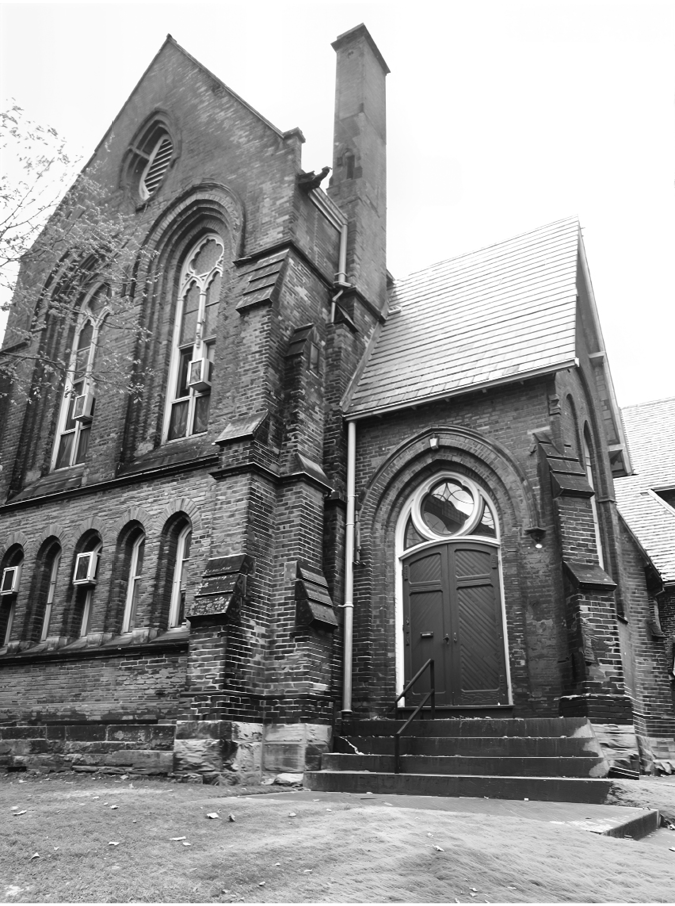
Figure 1. The location of the People’s Institute, at 88 College Street, Toronto.
Photograph by Heather McIntyre.
Other records of the area’s usage and residents support this description of demographic change. As of 1910, the city’s street directory shows that neighbours of 88 College Street included the Children’s Hospital across the street and a proliferation of doctor’s offices. A few blocks away, there was a drink bottling factory, the Toronto House of Industry, a Chinese laundry, an African Methodist church, and a nurses’ residence.56 The largest landmark nearby was the Toronto Children’s Hospital.57 Based on census numbers, the demographic shift that accompanied urbanization was a change more in the class composition of the neighbourhood than in its ethnicity. The district was strongly British Canadian: 66 per cent of the residents of Toronto Centre, the census district in which College Street was situated, identified themselves as British on the 1911 census, whereas 63 per cent of all Torontonians identified as British.58 However, the people who remained in the district were increasingly working-class, single, and employed in the city centre’s manufacturing industries. Of the 13,000 residents of Toronto Centre, 6,070 were employed in the manufacturing industry at some point in 1910, making up about a quarter of the 22,437 manufacturing workers in Toronto as a whole.59
The population near College Street also had a much higher ratio of single men than other census districts. In Ward 3 of Toronto Centre, the smaller census subdivision the census used for some measures, over 55 per cent of the electoral ward was recorded as single, and over 60 per cent of those singles were men who had never been married.60 Unmarried men were not generally known for church participation, and many ministers expressed concern about being able to attract their attention.61 Working-class congregants were also less able to donate than middle-class ones, which caused financial difficulties to churches that reached out to them but did not have other financial resources. As a result, several churches in Toronto Centre – including St. Margaret’s Anglican on Spadina Street, Bethany Chapel in the southwest area of Saint John’s Ward, and its neighbour Erskine Presbyterian – closed within three years of the founding of the People’s Institute.62 This illustrates that Eby and his contemporaries may have underestimated the difficulty of sustaining any kind of church in the area.
Because of these demographic shifts, the People’s Institute, with its focus on “working people,” had a large yet challenging audience to address in central Toronto. Yet who were the “working people” Eby spoke to? While historians of the working class and of working-class religion have debated more precise definitions of “the working class” and of its identity and self-consciousness, Eby was not as interested in a specific definition. He frequently used such phrases as “working people,” “workers,” and simply “the people”; it seems he thought his audience would know “workers” when they saw them, and he used those terms frequently without feeling the need to define them. This populist style was shared by some other churches in southern Ontario – namely, the Christian Workers, which, Kenneth Draper argues, created a form of working-class identity by constructing a positive, Christian identity around being “the people” and “workers.”63 Both the Christian Workers and Eby used this language to criticize churches they felt did not meet the needs of the majority, contrasting their needs as manual workers and tradespeople against churches that they felt catered to professionals and business owners. As Draper notes, these terms were mostly associated with working with one’s hands, but within that, people from a wide swathe of income and employment, from highly skilled workers and “petit bourgeoisie” who owned and ran their own workshops all the way to day labourers and the “reserve army of the unemployed,” might identify themselves with terms like “common people” or “workers.” This would suggest the People’s Institute was aimed at a very broad swathe of the population.
However, identifying a more specific social class would help analyze the goals and successes or failures of Eby’s church, beyond its rhetorical orientation.64 Given its origins, Eby’s project seems to have taken a broad approach to the “working people,” beginning with the unemployed men alongside whom the church was first launched.65 This focus reflected the realities of a burgeoning city where about 40 per cent of manual workers were working not in manufacturing but in other sectors, and where workforce participation did not keep pace with the growth of the population, suggesting an increase in the number of unemployed people between 1900 and 1911.66 There was also considerable cyclical and seasonal unemployment in Toronto, meaning that one’s occupational status often changed seasonally or at the whims of an employer, making one’s occupation an inconsistent measure of one’s class status. This class of precarious, unemployed, and transient workers made up the “dispossessed” of Toronto, identified by Palmer and Héroux as a relatively disempowered but sometimes class-conscious and active part of the working class. The dispossessed were defined by their loss of stability in a society where increasing concentration of land ownership in the late 19th century and increasing use of machinery to replace human labour at the start of the 20th century created a new class of people without consistent work.67 In his dissertation, David Thompson further vindicated the importance of the dispossessed and of unemployed protests as part of the history of workers’ movements, writing that their movements and struggles evinced a consciousness of the opposition between themselves and the capital-holding class. He examined the protest of January 1909 in this light.68 These workers participated in a working-class identity, partaking in self-awareness, self-description, and political action – and some of them became the nucleus of Eby’s new church.69
With this context in mind, Toronto’s “working people” occupied a wide swathe of manual, service, trades, and manufacturing occupations, giving rise to diversity within working-class identities and lifestyles. In her study of leisure in Ontario towns, Marks drew a distinction between “respectable” and “rough” working-class cultures, which largely played out in different leisure spaces – churches, men’s associations, service clubs, hotel bars, and roller rinks for “respectable” people; and taverns, illegal bars called “blind pigs,” gambling locations, and street corners for “rough” men.70 In urban areas, one could add mission churches to the list of options for the “rough” working class of both genders; these were churches funded by richer populations and situated in poorer neighbourhoods with the intention to reach out to “unchurched,” rougher constituencies, where attendees were likely to drop in occasionally.71 Church offerings such as night schools or boxing groups sought to appeal to this demographic.72 “Rough” sociability or status was associated with lower wages and work that did not require official apprenticeship or training, including day labour and some kinds of factory work.
So, with the People’s Institute’s open call to all “workers” in Toronto, which of these demographics actually filled its pews? The Institute’s surviving records seem to tentatively indicate that its congregation consisted of Torontonians engaged in a mix of occupations, especially manual labour, but also that its numbers were modest. The only surviving membership list, dated 19 January 1910 and written in Eby’s hand, contained 24 names and addresses, of which sixteen could be identified in the 1911 census or 1910 City of Toronto tax rolls.73 Two of the members who could not be identified listed 88 College Street as their home address; perhaps they were unhoused and used the address of the church as “home” for the purpose of the membership list. For the six other unidentifiable members, it is likely that details were recorded wrongly in the church record or in the census and tax rolls, or that the unidentifiable group was transient.74 The votes in the final meeting of the church’s membership show there were about 40 officially registered members of the People’s Institute, meaning that the list of 24 members represents about half of the official membership.75 However, there is no attendance data to suggest whether they were a significant proportion of those who showed up on Sundays.
Among the sixteen members whose addresses and names could be matched up with the 1911 census or 1910 tax rolls, nine were men: two professionals (a doctor and a retired minister), two managers in an industrial setting (an “inspector” and a picture frame factory foreman),76 three industrial workers (a machinist, a bookkeeper, and a factory operator), and two food service workers (a baker and a cook).77 Of the seven women listed, four were married and had no occupation listed, and thus probably worked in the home – all were identifiably wives of men with working-class occupations (a machinist, a baker, a cook, and a factory operator). Of the other three women, one was an unmarried factory operator and another a married nurse. The third was a young, unmarried woman who gave a home address belonging to a white-collar landowner and his wife, but she is not identified as a tenant or a resident in the census or tax rolls, raising the possibility that she may have been the married couple’s domestic worker. Additionally, the church records reveal the addresses of three of the church’s deacons: these three men were a physician, a baker, and a machinist, suggesting that the leadership of the church was of mixed class backgrounds. The overall group, including those who could not be verified on the census, included three married couples, one married woman, three women identified as “miss,” and six men either joining on their own or identified as single in the census.
|
Church member |
Address given in minutes |
Age in census or tax roll |
Occupation in census or tax roll |
Ethnicity in census |
Marital status |
|---|---|---|---|---|---|
|
Miss Maude Carey |
30 Moscow Avenue |
36 |
Operator in factory |
English, immigrated 1909 |
Single |
|
Rev. C. T. Cocking |
31 Hawthorn Avenue |
50 |
Retired Minister |
English, immigrated 1880 |
Widower |
|
Mr. W. J. Davies, deacon |
84 Gerrard Street West |
36 |
Machinist |
English, immigrated 1905 |
Married, two children |
|
Mrs. W. J. Davies |
84 Gerrard Street West |
33 |
None listed (housework?) |
English, immigrated 1905 |
Married, two children |
|
William Freeland, deacon |
None given – identified in census using first and last name |
24 |
Physician |
Scotch |
Single, lived with mother |
|
Mr. G[illegible], seems to be George Gress on census |
165 Jarvis Street, subletter |
20 |
Bookkeeper, roommates registered as labourer and machinist |
English |
Single |
|
Mr. A Grave |
King Street (no number given) |
23 |
Cook |
English |
Married |
|
Mrs. A Grave |
King Street (no number given) |
21 |
None listed (housework?) |
English, b. Scotland |
Married |
|
Mr. Frank S. Hick(s) |
170 Pearson Ave, homeowner |
52 |
Inspector |
Unknown |
Married |
|
Mrs. Frank S. Hick(s) |
170 Pearson Ave, homeowner |
[none given] |
Unknown |
Unknown |
Married |
|
Mr. J. McTaggart |
23 Millicent Street, homeowner |
53 |
Operator |
Scottish |
Married, six children |
|
Mrs. J. McTaggart |
23 Millicent Street, homeowner |
49 |
None listed (housework?) |
Scottish |
Married, six children |
|
Mr. A. Mould, deacon |
248 Concord Avenue |
32 |
Baker |
English, immigrated 1905 |
Married, four children |
|
Mrs. A. Mould |
248 Concord Avenue |
31 |
None listed (housework?) |
[none given] |
Married, four children |
|
Mrs. M. Norman |
614 Bloor St West, homeowner |
39 |
Nurse |
English |
Married |
|
Mr. W. E. Pearce |
388 Ossington, subletter |
53 |
Picture framer, frame factory foreman |
Unknown |
Unknown |
The addresses of People’s Institute members were scattered across the city, from near present-day High Park in the west to the present-day Saint James neighbourhood in the east, and from Front Street in the south and approaching Bloor Street in the north. This suggests that Eby’s wide newspaper promotion drew in members from other areas of the city who identified with the Institute’s ideological goals, but that it did not connect as well to the closest inhabitants. The ages of the members discoverable in the census and tax rolls ranged from 21 to 53, including two brothers who joined together in their 20s, six members in their 30s, and three members over 40 years of age. This is a bit older than the composition of the immediate neighbourhood of the church, which skewed toward people in their 20s and early 30s. The demographics of the church also skew more toward women and married people than the demographics of the nearby neighbourhood; this matches patterns of churchgoing in early 20th-century Canada, where women and married men were more likely to join churches than single men. The members recorded in the census reported several different Protestant backgrounds, including Methodist, Presbyterian, Anglican, and Baptist, suggesting that the People’s Institute’s anti-denomination stance resonated with a group raised in a variety of Protestant churches, or perhaps that the membership moved on in a variety of directions after the Institute closed. Thus, the membership list suggests that the membership of the church ranged from professionals to the unhoused, and that a plurality of its members were manual workers and manual workers’ wives in various stages of life, drawn from around Toronto’s core.
Because this list does not encompass all church members, let alone all attendees, the broader composition of the congregation is still unclear, but indirect and rhetorical hints about the constituency of the People’s Institute suggest that it included many manual labourers and impoverished people. A news article recounting the end of the church featured some quotes from attendees of the Institute, one of whom complained that attending ought to be free if the church wanted more people to come to events. Although this comment was met dismissively – others pointed out that services and meetings were already free – it is possible the speaker was unfamiliar with church language and thought the “offerings” collected during services were fees for attending (not an entirely inaccurate inference, considering that church attendees often judge others for not donating during services).78 This suggests that at least one attendee of the People’s Institute was not familiar with church customs or language, so the Institute might indeed have connected with the “unchurched” demographic Eby was aiming to assemble.
Articles about the dissolution of the Institute imply that reporters believed the People’s Institute members to be part of the precarious and informally trained working class, and not part of the “respectable” working-class segment of highly trained workers. A reporter for the Toronto Daily Star described a meeting between members of the People’s Institute and of the old Zion Church as “proceeding with all the interest of an Irish eviction.” This phrasing compares the Zion Church group to respectable landlords and the People’s Institute group to impoverished Irish tenants, playing on the association between the Irish and lower status, and associating the crowd from the People’s Institute with the perceived unruliness of the “rough” working class.79 Language throughout the articles also focused on the Institute members’ anger, thus associating them with the perceived poor self-regulation and proneness to violence of the “rough” stereotype. This implies that, at least in the reporters’ assessment, the People’s Institute drew in a working-class crowd of the “rough” group who might have otherwise not fit in within a church. Finally, a reflection written by Christian Socialist preacher W. E. S. James, who founded the “Church of the Revolution” at College Street after the Institute’s collapse, stated that “the supporters had never been accustomed to supporting a cause with any real sacrifice, and the movement could not be financed.”80 This suggests that the congregation was impoverished enough that regular contributions would be a “sacrifice,” and that they were not used to paying into voluntary societies or churches, implying that they had not been official church members before. This all adds up to a picture of a fledgling congregation composed of a mix of workers, including the “rough” working class.
The Fall of the People’s Institute
Despite the extensive attention it garnered, the People’s Institute experiment did not last long. On 21 April 1910, only 16 months after the church had first surged into the news, the Toronto Star published its obituary. The largely middle-class former attendees of Zion Congregational Church, who still held the lease on the building, became irate with Eby’s project. As a long-time Methodist minister and missionary, Eby mostly lived off his pension from the Methodist Church. However, the Methodist Assembly of Canada threatened to cut off his pension if he did not cease his activities at the People’s Institute.81 In Eby’s words, the Missionary Committee of the Methodist Church saw his actions as too radical and threatened to revoke the pension if he did not “withdraw his connection with Zion Church.”82 This dual threat, both to his livelihood and to the real estate in which the People’s Institute operated, made it impossible to continue the Institute. Accounts in the Globe caricatured the “new members” of the church – those from the Institute – as loud and unruly.83
During the wrangling over whether the People’s Institute could remain in the Zion Church building, Eby allegedly overstepped his bounds. He had sought to change the section of the parish’s handbook that dictated who counted as a member so that those who had not attended in three months or more could no longer vote. However, members of Zion’s congregation who had been there before the founding of the People’s Institute voted against the new handbook, suggesting that the fledgling congregation was still smaller than the former one. Eby defended this action in the Globe by writing that only the trusteeship of the property should be in question, and not the “method of work” or “activities” at the church – a defensiveness that suggests he faced opposition from long-time members to his decision to invite controversial groups to use the space.84 The mostly middle-class, “family” demographic of the old members was not broadly supportive of the politics of the People’s Institute and did not want to continue covering the financial burden of the downtown property. As of March 1910, the church was $9,000 in the red, and the new membership of the People’s Institute reportedly contributed about $12 a month to the church – an amount that could not service the debt.85 Frictions between the two membership groups were revealed when the Zion Church members moved to officially express gratitude to Reverend Eby. The new members viewed the motion as insincere and voted against it, arguing that “we do not think you mean what you say when you talk of appreciation. Your action in staying away from the church contradicts it.”86 In the face of financial pressure and a divided congregation, Eby backed down and resigned his position. The old members still held a majority of the votes, and the decision was made to sell the church building.
The business of the Zion Church was quickly wrapped up, and the property was sold to the Canada Congregational Missionary Society on 22 June 1910.87 Despite Eby’s promise to try to keep the Institute alive at another location, the People’s Institute fell out of the public record, a victim of finances, intra-church demographic conflict, and its controversial reputation. The church building itself passed through several hands after the closure of the People’s Institute, including another, unrelated and equally short-lived, leftist church group from 1914 to around 1917, which dubbed 88 College Street the “Church of the Social Revolution.”88 The building later passed into the ownership of the University of Toronto, which still owns it today.
Church Strategy in the Growing City
Given its brief existence, what is the place of the People’s Institute in the overall development of church movements and working-class religion in southern Ontario? Contextualized as part of a cluster of politically active churches that emerged in Toronto, it especially demonstrates the vulnerabilities that made these churches short-lived. It is also a failed product of a larger era of church experimentation. The People’s Institute, as we examined earlier, proliferated new projects and offered open space to community groups. At the same time, several other experiments in church structure, including “institutional churches” and missions in working-class areas, sought to adapt the church to the industrial working class – but the key difference that sustained some of these projects was broader denominational backing.
Rhetoric about the religious disengagement of the working class circulated frequently among clergy and middle-class readers throughout the Victorian era and the beginning of the 20th century, linked with moral panics about youth vagrancy, drinking, and unruly protests.89 It is amid this loud fretting about the future of Canada’s churches in industrial cities that churches like the People’s Institute emerged, with leaders who wanted to reach the “unchurched” and reverse the perceived slump of Canadian Christianity.90 Some of the more self-consciously political of these efforts split off from established denominations and sought to create new kinds of churches for working-class audiences supported by or allied with union members, using names like “labour church” or “people’s church.” Most famously in Canada, William Ivens formed such a congregation in Winnipeg in 1918, which peaked in attendance during the 1919 General Strike.91 In his comprehensive study and primary-source compendium on this wave of working-class church formation in the English-speaking world, Rev. David Fowler Summers identified three such churches in Toronto (including Eby’s), and three more across Canada. Toronto street directories between 1905 and 1919 reveal a presence of the evangelical Christian Workers but no other independent churches with names that would indicate a specific aim at the working class; likewise, searches of Toronto’s Star and Globe newspapers attest to the presence of the three churches identified by Summers but no more.
The broad narratives of the two other Toronto labour churches, as demonstrated in Summers’ compilation of sources and by historian Tom Mitchell’s writing on A. E. Smith’s life and work, demonstrate some key parallels with Eby’s trajectory. The Church of the Social Revolution was partly inspired by Eby’s own church. Its founder, W. E. S. James, recalls hearing about Eby’s attempt before his move to Toronto in 1914; he eventually took up the same building at 88 College Street as a location for his project.92 In June 1914, he asked the Methodist Church not to assign him to a new church so that he could start his own project, and it opened promptly in July 1914 in Parkdale. Since Parkdale was a more white-collar neighbourhood at the time, James soon moved the church to 88 College Street. He wrote that the services did not involve a lot of Bible reading or prayer, but rather focused on lessons and discussions about Christian socialism.93 However, the war and its accompanying economic disruption meant few donations in 1914, and James believed workers were afraid to be associated with self-proclaimed socialists because of hiring discrimination in war-related industries.94 This hostile atmosphere was not exceptional; Canadian labour churches, especially the Winnipeg branches during the General Strike, were targeted for government surveillance and were frequently denounced in the press as “anti-patriotic” or “atheistic” throughout the early 20th century.95 The Church of the Revolution had collapsed by 1918 because of financial problems. As Eby had learned, 88 College Street was a costly property that brought with it large monthly payments.
|
Church name (City) |
Years of operation |
Main pastor or leader |
Approximate peak Sunday attendance |
|---|---|---|---|
|
The Church of the Social Revolution (Toronto, ON) |
1914–c. 1917 |
Rev. W. E. S. James |
Unknown |
|
Labour Church (Winnipeg, MB) |
1918–24 |
Rev. William Ivens and Rev. J. S. Woodsworth |
During Winnipeg General Strike,6 locations with approx. 100–700 attendees each |
|
Peoples’ Church (Brandon, MB) |
?–1919 |
Rev. A. E. Smith |
Over 600 |
|
People’s Sunday Evening (Vancouver, BC) |
1920–? |
J. S. Woodsworth |
Unknown |
|
People’s Forum (Winnipeg, MB) |
1913 |
J. S. Woodsworth |
Afternoon 300, evening 800 |
|
People’s Church (Toronto, ON) |
1923–24 |
A. E. Smith Salem Bland |
Approx. 700 |
Source: Rev. David Fowler Summers, “The Labour Church and Allied Movements of the Late 19th and Early 20th Centuries,” PhD thesis, University of Edinburgh, 1958, appendix vol., 150–200.
The third example of a labour church in Toronto is the People’s Church, open from 1923 to 1924 in the Old Spadina Hall in the centre of downtown Toronto. Its founder, A. E. Smith, was originally a Methodist minister but moved progressively to the left throughout his life. By the time he moved to Toronto, he had already been rejected by Methodists in the Prairie provinces as too radical and was contemplating adopting Communism as a personal ideology.96 Meetings of the People’s Church, which focused on discussions about the relationship between morality and politics, were initially popular. Supporters decided to form a summer school program for 1924, aiming to educate adults about economics, sociology, English, and rhetoric. However, halfway through its season, the school became a flashpoint between communists and trade union labour activists within the congregation, who had different visions of how change should be achieved and thus different ideas about what the school should teach. It closed abruptly. The church itself, already riven with divisions, finally closed when Smith’s son publicly declared membership in the Communist Party and the congregation fractured once more.97
Although the proximate causes of these churches’ shutdowns – the wartime economic downturn and infighting about unionism versus Communism, respectively – are a bit different, taken together with the story of the People’s Institute they seem to suggest that division among supporters and financial issues were two of the largest issues that new labour churches in Toronto faced. All three of these were small projects spearheaded by single leaders, were affected negatively by the hostile public atmosphere attached to leftist thought, and struggled to pay their operation costs. The urban environment of Toronto presented a large audience that seemed receptive to the three preachers’ messages at first, but the high cost for a location in the centre of the city and the skepticism of religiously minded people toward leftism were serious obstacles. Reflecting on Eby’s and his own efforts, James wrote that the People’s Institute and the Church of the Revolution both suffered from “the problem found in all Socialist Churches, – it was too religious for the Socialists and too socialistic for the religious people.”98 This statement succinctly explains how left-wing churches fell between two movements – they could not derive support from wider leftist movements because communist and socialist organizations were not interested in funding churches, viewing taking sides between religious factions as tangential to their larger goals; and larger church bodies, as well as many working- and middle-class Christians, did not want the amount of controversy that unorthodox and left-wing preachers attracted. Additionally, preachers such as Eby, Woodsworth, Ivens, Irvine, and James mostly believed in a liberal form of Christianity that de-emphasized or discredited the supernatural. This tendency seems to have flourished more in middle-class spaces, where experimentation with theological liberalism or alternatives like spiritualism were more common, but they might not have played as well among the working class.99 Like the Salvation Army or the Christian Workers’ Church, working-class Christians might have found more consistency in a theologically conservative expression of working-class Christianity; like A. E. Smith, many theological liberals might have found more consistency in a secular socialist outlook.100
As another kind of response to perceived working-class disengagement, a few other church experiments arose contemporaneously with the labour churches. These examples shared the People’s Institute’s goal of evangelizing working Torontonians but promoted different political approaches to Christianity. One of these approaches was known as the “institutional church” model. These churches, attempting to re-engage people who did not frequently attend, adopted a model where churches functioned as community centres and provided multiple forms of entertainment and education.101 According to historian Todd Stubbs, the term “institutional churches” arose to describe churches that used modern management techniques; sought to build larger buildings with community facilities; and offered educational, recreational, and other services alongside worship activities. Stubbs argues that these represented a socially minded response to industrialization that made use of wider denominational support to arrange education, entertainment, and spiritual programming for working-class neighbourhoods.102 His case study of Earlscourt Methodist Church in Toronto demonstrates how the lead pastor, Peter Bryce, acted with centralized authority as a manager for the church and advocated compromise between workers and business owners. This model proved successful in other parts of Canada and continues to be part of mainstream Protestant church-building strategy.
To compete with the sheer variety of associations and entertainments in burgeoning Toronto, as well as other churches’ expanded offerings, the People’s Institute attempted to provide some of these kinds of activities, in the form of its choral shows and concerts and the “People’s Lyceum” reading groups and classes. Similarly, many of the labour churches identified in Summers’ work, both domestically and internationally, used adult education, social meetings, public lectures, and musical entertainment as tools to spread their politics and spirituality. The main difference between the long-term success of mainstream institutional churches and the People’s Institute seems to have been financial. Although Eby’s reputation as a speaker and a controversial preacher obtained publicity for the People’s Institute, trying to fund a new venture that appealed mostly to poorer demographics while working out of a building with a considerable mortgage meant the Institute could not keep up with financial demands – the property had over $5,000 in loans and mortgages, and the Institute brought in about $12 in donations a week, a situation that the paid-admission concert series was meant to address but ultimately did not.103 Although the middle-class former congregation of Zion Church might have been able to continue donating to keep the 88 College site alive, they were not interested in funding a new congregation they viewed with suspicion. Meanwhile, Earlscourt and similar urban churches could more easily find support, as their connection to a larger denomination allowed stability and provided respectability, especially contact with middle-class and moneyed donors. This path was not open for radical preachers like James, Smith, and Eby, or their Winnipeg colleague William Ivens, who all either quit or were dismissed from their Methodist church of origin because of their politics and their unorthodox interpretations of Christian belief.
This, in the end, paints a pessimistic picture of the political possibilities of churches’ role in left-wing political organizing. However, it modestly reframes the ongoing debate about the role of religion in working-class identity. If E. P. Thompson and many influenced by him viewed the church as a moneyed project that guided working-class people in a passive and apolitical direction, and preachers like Eby and Smith hurled invective at “Churchianity,” it was because church leaders in large denominations and places of social prominence often acted with indifference to poor people’s needs – but not necessarily because there was no such thing as a politically-aware working-class Christianity. A survivorship bias affects our view of Canadian churches in the first decades of the 20th century. Venerable, widespread religious institutions were not conservative because they were venerable; they found it easier to become venerable because they were conservative. Donations from richer supporters, wide institutional backing, and the neutrality or positivity of the press and politicians helped mainstream churches survive, while labour church upstarts contended against a lack of donations, public skepticism about leftism, the middle-class connotations and institutional shunning of theological liberalism, and denunciations by their peers in more established ministries. Meanwhile, many labourers and poor people were interested in spirituality, as is evidenced by the upsurges of interest when these left-wing churches appeared, the persistence of home spiritual practices, working-class church movements like the Christian Workers and Salvation Army, and the Christian idiom used in labour organizing to express moral and political positions. But this interest never amounted to a long-term or mass movement toward left-wing Protestant Christianity in Canada. When preachers left denominational structures to articulate a left-wing political Christianity more freely, they faced the financial difficulties of being out on their own, and their views suspended them between the world of religious institutions and the world of left-wing movements. This meant – as Smith, Ivens, Woodsworth, James, and Eby discovered – that it was hard to take popular interest in a “People’s Christianity” and turn it into a long-lasting institution.
I would like to thank Dr. David Thompson for suggesting Eby as a subject of research during a seminar class, for his guidance in finding sources about the unemployed protest, and for an introduction to the world of labour history. Additionally, I would like to thank Dr. Mark McGowan, Dr. Heather Murray, Ari Ellis, and Dr. Suraiya Allidina for feedback on different versions of this paper.
1. “A Preacher to the Unemployed,” Toronto Star, 21 January 1909, 1; “For the Unemployed,” Toronto Star, 30 January 1909.
2. “A Preacher to the Unemployed,” Toronto Star.
3. Richard Allen, “The Social Gospel and the Reform Tradition in Canada, 1890–1928,” Canadian Historical Review 49 (December 1968): 382; Ian McKay, Reasoning Otherwise: Leftists and the People’s Enlightenment in Canada, 1890–1920 (Toronto: Between the Lines, 2008), 472; Bryan Palmer and Gaétan Héroux, “‘Cracking the Stone’: The Long History of Capitalist Crisis and Toronto’s Dispossessed, 1830–1930,” Labour/Le Travail 69 (Spring 2012): 42; David Thompson, “Working Class Anguish and Revolutionary Indignation: The Making of Radical and Socialist Unemployment Movements in Canada, 1875–1928,” PhD diss., Queen’s University, 2014, 163–165.
4. E. P. Thompson, The Making of the English Working Class (London: Gollancz, 1965), 11.
5. On this late Victorian wave of Christian reform language and how it transitioned into the 20th century through figures such as Woodsworth and Mackenzie King, see Ramsay Cook and Donald Wright, The Regenerators: Social Criticism in Late Victorian English Canada, 2nd ed. (Toronto: University of Toronto Press, 2018); on the moralistic and gendered dimensions of the Victorian reform discourse in Toronto, see Christina Burr, Spreading the Light: Work and Labour Reform in Late Nineteenth-Century Toronto (Toronto: University of Toronto Press, 1999).
6. Richard Allen wrote about Protestant clergy’s quasi-political responses to industrialization and inequality in The Social Passion: Religion and Social Reform in Canada (Toronto: University of Toronto Press, 1971); Melissa Turkstra wrote about attempts to re-engage the working class in churches in “Working-Class Churches in Early Twentieth Century Hamilton: Fostering a Distinctive Working-Class Identity and Culture,” Histoire Sociale/Social History 41, 82 (2008): 459–503.
7. Melissa Turkstra, “Social Gospel in the City: Rev. W. E. Gilroy and Hamilton Clergy Respond to Labour Issues, 1911–1918,” Urban History Review 37, 1 (2008): 21–35; Tom Mitchell, “From the Social Gospel to ‘The Plain Bread of Leninism’: A. E. Smith’s Journey to the Left in the Epoch of Reaction after World War I,” Labour/Le Travail 33 (Spring 1994): 125–151.
8. Melissa Turkstra, “Constructing a Labour Gospel: Labour and Religion in Early 20th-Century Ontario,” Labour/Le Travail 57 (Spring 2006): 93–130; Christo Aivalis, “In Service of the Lowly Nazarene Carpenter: The English Canadian Labour Press and the Case for Radical Christianity, 1926–1939,” Labour/Le Travail 73 (Spring 2014): 97–126.
9. On King’s conservative use of Christian rhetoric and ideas about the organic unity of society, see Cook and Wright, The Regenerators, 197–208; Paul Craven, “An Impartial Umpire”: Industrial Relations and the Canadian State, 1900–1911, 1st ed. (Toronto: University of Toronto Press, 1980), 31–73.
10. Neil Semple, “Eby, Charles Samuel,” in Dictionary of Canadian Biography, vol. 15 (University of Toronto/Université Laval, 2003–), accessed 29 August 2024, https://www.biographi.ca/en/bio/eby_charles_samuel_15E.html.
11. C. S. Eby, Immediate Christianization of Japan: Prospects, Plans, Results (Yokohama: The Japan Mail, 1884), https://archive.org/details/christianization00ebyc; Eby, Methodism and the Missionary Problem (Toronto: William Briggs, 1886), https://archive.org/details/cihm_59547; Eby, J. A. Ewing, and J. M. Dixon, Christianity and Humanity: A Course of Lectures Delivered in Meiji Kuaido, Tokio, Japan (Yokohama: R. Meiklejon and Co., 1889), https://archive.org/details/cihm_06044/page/n7/mode/2up.
12. C. S. Eby, “Christianity and Civilization,” lecture 1 in Eby, Ewing, and Dixon, Christianity and Humanity, 21.
13. “Christian civilization,” Eby wrote, would offer ideals that would motivate people to pursue “the vaster possibilities of progress” reflected in Isaiah’s dream of “the lion lying down with the lamb.” Eby, Ewing, and Dixon, Christianity and Humanity, Lect. 1, 48.
14. C. S. Eby, Sermon on the Mount: The Charter of the Kingdom (Toronto: Canadian Citizens’ League, 1907), https://archive.org/details/cihm_86079/page/n7/mode/2up.
15. Eby, Sermon on the Mount, 13, 13–14.
16. Eby, Sermon on the Mount, 50.
17. Allen, Social Passion, 5; Cook and Wright, The Regenerators, 174–195.
18. “Our Duty Is on Earth,” Globe, 8 July 1908.
19. The idea that humanity was not inherently sinful had been labelled as a heresy in the 16th century and named after the theologian Arminius, who had espoused it. See Jean-Yves Lacoste, “Arminianism,” in Jean Yves Lacoste, ed., Encyclopedia of Christian Theology, vol. 1 (New York: Routledge, 2005), 95.
20. “Not Charity Is Needed: But Righteousness to Rectify All Social Ills,” Globe, 29 June 1908. Hindsight often opposes evangelical and liberal or evangelical and social gospel tendencies in theology, viewing them as oppositional categories; although evangelical Christians did not share Eby’s opinions about miracles and his lack of emphasis on the divinity of Jesus, they shared the goal of evangelism. For thinkers like Eby, the possibility of evangelism rested on articulating a relevant and socially conscious Christian message. Richard Allen makes this argument about Salem Bland, another prominent social gospel preacher. Allen intends it as a critique of historians’ opposition of evangelical and liberal currents in late 19th- and early 20th-century Christianity. Although the definition of “evangelical” is contested, Allen adopts a broad definition that refers to Protestants concerned with personal experience of God, efforts to spread the faith, and theological emphasis on the death and Resurrection of Jesus. Allen, The View from Murney Tower: Salem Bland, the Victorian Controversies, and the Search for a New Christianity, book 1, Salem Bland: A Canadian Odyssey (Toronto: University of Toronto Press, 2008), xiii.
21. “Discuss Live Questions,” Globe, 27 September 1909.
22. “Discuss Live Questions.”
23. See Bryan D. Palmer, “The Remaking of the Working Class and Its Oppositions, 1895–1920,” in Working-Class Experience: Rethinking the History of Canadian Labour 1800–1991 (Toronto: McClelland and Stewart, 1992), Chap. 4; Bryan D. Palmer and Gaétan Heroux, Toronto’s Poor: A Rebellious History (Toronto: Between the Lines, 2016), 63–86.
24. Craig Heron and Bryan D. Palmer, “Through the Prism of the Strike: Industrial Conflict in Southern Ontario, 1901–1914,” Canadian Historical Review 8, 4 (1977): 423–457; on the particular struggles of metalworkers as a representative example of industrial craftsmen, see Craig Heron, “The Crisis of the Craftsman: Hamilton’s Metal Workers in the Early Twentieth Century,” Labour/Le Travail 6 (Fall 1980): 7–48.
25. For a mathematical exposition of cost of living and wages in Toronto, see Michael J. Piva, The Condition of the Working Class in Toronto, 1900–1921 (Ottawa: University of Ottawa Press, 1979), 27–60. For a reflection on the longer series of political and economic changes prompting these crises, see Ian G. McKay, “The Canadian Passive Revolution, 1840–1950,” Capital & Class 34, 3 (2010): 361–381.
26. On protests of the unemployed outside Toronto, see James Mark Leier, Where the Fraser River Flows: The Industrial Workers of the World in British Columbia (Vancouver: New Star Books, 1990); David Schulze, “The Industrial Workers of the World and the Unemployed in Edmonton and Calgary in the Depression of 1913–1915,” Labour/Le Travail 25 (Spring 1990): 47–75. On local left-wing candidates, see Horatio C. Hocken, “The New Spirit in Municipal Government (1914),” in Paul Rutherford, ed., Saving the Canadian City: The First Phase, 1880–1920 (Toronto: University of Toronto Press, 1974), 195–206; Gene Howard Homel, “James Simpson and the Origins of Canadian Social Democracy,” PhD diss., University of Toronto, 1978.
27. On the inadequacy of charitable resources for the number of impoverished Torontonians, see Piva, Condition of the Working Class, 61–86. On the limits and inefficiencies of charities, see Palmer and Héroux, Toronto’s Poor, 35–38, 49–62. On secularist groups and the anxiety of clergy and conservative intellectuals, see Cook and Wright, “The Anxieties of a Moral Interregnum,” in The Regenerators, Chap. 3.
28. Lynne Marks wrote about and largely debunked late 19th-century concerns around leisure distracting from faith in Revivals and Roller Rinks: Religion, Leisure, and Identity in Late-Nineteenth-Century Small-Town Ontario 2nd ed. (Toronto: University of Toronto Press, 1996). David Marshall reflected on the long-term anxiety complex about church influence amongst Protestant clergy in Secularizing the Faith: Canadian Protestant Clergy and the Crisis of Belief 1850-1940 (Toronto: University of Toronto Press, 2020).
29. Historians have debated the issue of early secularization or of decline during this era; see, for example, Marshall, Secularizing the Faith. Others, including Richard Allen in his work on the social gospel in Canada and Michael Gauvreau in his work on evangelical churches, have argued that the church was still a vital social and political force and that the rhetoric of peril or decline was linked only to church membership numbers (or part of a longer tradition of decline narratives as a form of Christian rhetoric); see Sacvan Bercovitch, The American Jeremiad (Madison: University of Wisconsin Press, 1978), on this tendency in American Christian rhetoric. See Allen, Social Passion; Gauvreau, The Evangelical Century: College and Creed in English Canada from the Great Revival to the Great Depression (Montréal and Kingston: McGill-Queen’s University Press, 1991).
30. The protest was part of a series of walkouts and demonstrations by House of Industry inmates to improve its conditions and allow more “outdoor” relief – relief provided without requiring the recipient to live in the harsh conditions of the House of Industry. Papers characterized the January 1909 protest as the most “militant” yet, with a turnout of about 1,000 unemployed men and several prominent socialist or otherwise left-wing leaders – namely, Wilfrid Gribble of the Socialist Party of Canada and Ernest Drury, a union organizer for the International Brotherhood of Electrical Workers. See D. Thompson, “Working Class Anguish,” 167.
31. Their argument about their right to use the square outside City Hall and later Grange Park is very similar to the point of a series of protests of the unemployed organized by the iww in Vancouver two years later, known as the “Free Speech Fight”; it was recounted in Leier, Where the Fraser River Flows, 57–85; “Nother Ruction at City Hall,” Toronto Star, 2 February 1909.
32. “A Preacher to the Unemployed,” Toronto Star, 13.
33. Ernest Drury, who had been arrested for distributing circulars without a licence at a public demonstration about free speech, said in court that “there was one law for the poor man and another for the rich,” as churches and department stores were permitted to advertise all they wanted. “For the Unemployed,” Toronto Star, 8.
34. “Not Charity Is Needed.”
35. “People’s Institute,” Toronto Star, 22 September 1909.
36. “Rev. Dr. C. S. Eby States His Case,” Toronto Star, 22 April 1910.
37. The name “People’s Forum” and its format of speeches and discussion groups on similar reform topics were taken up by several other left-wing Christian organizations after Eby’s version shut down. Notably, J. S. Woodsworth began a venture under the same name in 1913, and Unitarian minister William Irvine opened a People’s Forum in Calgary in 1914. Both also closed down within a couple years. See Allen Mills, A Fool for Christ: The Political Thought of J. S. Woodsworth (Toronto: University of Toronto Press, 1991), 51–52; Anthony Mardiros, William Irvine: The Life of a Prairie Radical (Toronto: Lorimer, 1979), 39–41.
38. “The People’s Institute: Rev. Dr. Eby Explains Movement at Zion Church,” Globe, 21 September 1909, 4.
39. “Church Services Tomorrow,” Toronto Star, 6 February 1909.
40. The moral panic around “white slavery” focused on the trafficking of white women into the sex trade. Historians have identified paternalistic and racist elements among its motivations and Methodists, the Salvation Army, and police as its main believers. See Mariana Valverde, The Age of Light, Soap, and Water: Moral Reform in English Canada, 1885–1925 (Toronto: University of Toronto Press, 2008), 77–104. On laws passed against prostitution in part to target “white slavery,” see Constance Backhouse, “Nineteenth-Century Canadian Prostitution Law: Reflection of a Discriminatory Society,” Histoire Sociale/Social History 18, 36 (1985): 387–423. On Eby’s speech, see “Church Services Tomorrow,” Toronto Star, 27 February 1909.
41. “Church Services Tomorrow,” Toronto Star, 13 February 1909.
42. “The Bible and War,” Globe, 12 April 1909; “Council Items,” Globe, 22 June 1909.
43. Mills, Fool for Christ, 52.
44. “People’s Institute,” Toronto Star, 22 September 1909.
45. “Women’s Meetings,” Toronto Star, 26 May 1910.
46. “Referendum on Navy,” Toronto Star, 8 November 1909.
47. “Blames Darwinism,” Globe, 15 June 1909, 14; “White Man’s Nightmare,” Globe, 11 October 1907.
48. Nancy M. Forestell and Maureen Anne Moynagh, eds., Documenting First Wave Feminisms, vol. 1 (Toronto: University of Toronto Press, 2012), 353–357.
49. This is an area where the influence of Eby as pastor seems to be less direct; despite offering space for feminist organizations at the People’s Institute, Eby did not have a good record of co-operation with women’s mission organizations during his work for the Methodist church. See Rosemary Gagan, “Two Sexes Warring in the Bosom of a Single Mission Station: Feminism in the Canadian Methodist Japan Mission, 1881–1895,” in Elizabeth G. Muir and Marilyn Whiteley, eds., Changing Roles of Women in the Christian Church in Canada (Toronto: University of Toronto Press, 1995), 145.
50. Roberto Perin, The Many Rooms of This House: Diversity in Toronto’s Places of Worship since 1840 (Toronto: University of Toronto Press, 2018), 56.
51. Perin, The Many Rooms, 59.
52. Archibald Blue, Fifth Census of Canada 1911, vol. 2 (Ottawa 1912), 80.
53. “People’s Institute,” Toronto Star, 9 September 1909.
54. “The People’s Institute: Rev. Dr. Eby Explains.”
55. “A Preacher to the Unemployed,”
56. Might’s Greater Toronto City Directory, 1910 (Toronto: Might Directories, 1910), 116–118, https://archive.org/details/torontocitydirectory1910/page/116/mode/2up.
57. Ads for the Institute used it as a point of reference; see “The People’s Institute Zion Church,” Toronto Star, 16 October 1909.
58. The largest minority in Toronto Centre, meanwhile, was Jewish. This explains why the People’s Institute did not focus on the integration of immigrants, as some other working-class mission churches did; its potential audience was mostly English-speaking and at home in a British Canadian–dominated society. Archibald Blue, Fifth Census of Canada 1911, vol. 1 (Ottawa 1912), 248; Piva, Condition of the Working Class, 10.
59. Archibald Blue, Fifth Census of Canada 1911, vol. 6 (Ottawa 1912), 274–275.
60. Blue, Fifth Census of Canada 1911, vol. 1, 352.
61. There is some evidence for a crisis of masculinity in this period, especially in religious spaces, where ministers expressed concern about drawing in male congregants and argued over the ways in which Christian men should express masculinity; see Marshall, Secularizing the Faith. There was a perceived incongruity between participation in some Protestant churches and participating in the popular drinking culture of the working class or other “rough” entertainments; see Craig Heron, “The Boys and Their Booze: Masculinities and Public Drinking in Working-Class Hamilton, 1890–1946,” Canadian Historical Review 86, 3 (2005): 411–452. For instance, several Protestant churches endorsed military education in schools to promote manliness, and military chaplains expressed an anxiety about connecting to young men. See Mark Moss, Manliness and Militarism: Educating Young Boys in Ontario for War (Toronto: University of Toronto Press, 2001); Duff Crerar, Padres in No Man’s Land: Canadian Chaplains and the Great War, 2nd ed. (Montréal and Kingston: McGill-Queen’s University Press, 2014), 179.
62. Perin, The Many Rooms, 59.
63. In contrast to Eby’s own liberal social gospel, the Christian Workers were founded by a former Salvation Army leader and espoused a “plain gospel” of Biblical literalism and traditionalist theology, although the church was not connected to labour or politically engaged. This demonstrates how populist language can be used to reflect a variety of political positions and responses. See Kenneth L. Draper, “A People’s Religion: P. W. Philpott and the Hamilton Christian Workers’ Church,” Histoire Sociale/Social History 36, 71 (2003): 99.
64. Bryan Palmer has argued that relying excessively on discursive evidence about class identity can be unreliable; see Palmer, “Historiographic Hassles: Class and Gender, Evidence and Interpretation,” Histoire Sociale/Social History 33, 65 (2000): 136.
65. For some historians of the labour church, the term “working class” has an industrial connotation – for instance, historian of working-class religion Melissa Turkstra separates waiters, clerks, and other wage workers in non-industrial workplaces from the “working class” in her tabulation of demographics within Hamilton’s working-class churches. Turkstra, “Working-Class Churches,” 470. This definition seems to be derived from the primacy of union history within labour history, since unions were one of the first sites of investigation about workers’ lives in Canada; see Palmer, “Historiographic Hassles,” 112–114. It also derives from the traditional historiography about workers’ self-consciousness and identity, which began with E. P. Thompson’s exploration of industrializing Britain and the industrial working class that emerged, and became self-conscious, as factories became a primary source of employment; see Thompson, Making of the English Working Class, 8–33.
66. These participants in service work and waged labour outside of factory production frequently participated in the social spaces particular to working-class culture and shared a similar relation to capital. Female workers especially were more likely to work in these occupations or to occupy reproductive labour roles in working-class households, so a definition centring factory work as the sine qua non of the “working class” is problematically gendered. Piva, Condition of the Working Class, 12. For an example of women’s class-consciousness and strike organization, see Joan Sangster, “1907 Bell Telephone Strike: Organizing Women Workers,” in Sangster, ed., Through Feminist Eyes: Essays on Canadian Women’s History (Edmonton: Athabasca University Press, 2011), 53–80.
67. Palmer and Héroux, “Cracking the Stone,” 8–11.
68. Regarding the revolutionary consciousness of unemployed protestors and the January 1909 protests in Toronto, see D. Thompson, “Working Class Anguish,” 11, 163–165.
69. This is not to say that the class of the dispossessed was the most class-conscious strata of society. Although they were organized in Toronto in 1909, and in Calgary and Vancouver in the following two years, observers noted that the Calgary group fell apart when the most difficult winter ended and prospects improved. Likewise, Wayne Roberts observed in his thesis that occupational groups’ level of formal training did not correlate in either direction with their propensity to organize and critique the economic system; instead, particular occupational groups had particular conditions regarding their employment, format of work, and organizational resources. See Roberts, “Studies in the Toronto Labour Movement, 1896–1914,” PhD diss., University of Toronto, 1978, xiii – xiv; Schulze, “Industrial Workers of the World,” 49.
70. Marks, Revivals and Roller Rinks, 83–106. On the options related to alcohol and their connection to “boyish” working-class masculinity, see Heron, “Boys and Their Booze.”
71. Edward Smith, “Working-Class Anglicans,” Histoire Sociale/Social History 36, 71 (2003): 128–130.
72. Michael Gauvreau, “Factories and Foreigners: Church Life in Working-Class Neighbourhoods in Hamilton and Montreal, 1890–1930,” in Ollivier Hubert and Michael Gauvreau, eds., The Churches and Social Order in Nineteenth- and Twentieth-Century Canada (Montréal and Kingston: McGill University Press, 2006), 226.
73. Zion Congregation Church, congregation meeting minutes, 1910, Zion Congregational Church fonds, acc. no. 1977.723L, box 3, file 2, United Church of Canada Archives, Toronto (hereafter ucc Archives).
74. They may be missing because they moved before the next tax roll or census came around, or they may have been “unofficial” residents who were not registered in government documents.
75. Zion Congregation Church, congregation meeting minutes, 1910, ucc Archives.
76. Frank S. Hicks is identified on the 1910 tax rolls as simply an “inspector,” but the annual police reports for 1910 and 1911, which list all members of the local police force, show he was not one of Toronto’s 13 police inspectors. The 1911 census’s categorization of occupations lists “inspectors” who graded and categorized products in factories or logging sites, as well as government inspectors who enforced customs and trade regulations. Hicks would likely have been among those kinds of inspectors.
77. The baker did not own his home, making it more likely that he was not a business owner but a worker in someone else’s bakery business.
78. “Zion Church Congregation Paid in About $12 a Week,” Toronto Star, 5 May 1910.
79. “To Sell Zion Church: ‘Old Members’ Decide,” Globe, 5 May 1910.
80. W. E. S. James, “Notes regarding a Socialist Church in Canada,” 1955, in Rev. David Fowler Summers, “The Labour Church and Allied Movements of the Late 19th and Early 20th Centuries,” PhD thesis, University of Edinburgh, 1958, appendix vol., 386.
81. “To Sell Zion Church: ‘Old Members’ Decide.”
82. “To Sell Zion Church: ‘Old Members’ Decide.”
83. “Zion Church Troubles – Wordy Warfare between Old and New Members,” Globe, 21 April 1910.
84. “Zion Church Meeting – Trusteeship of Property Was under Consideration,” Globe, 23 April 1910, 11.
85. Zion Congregational Church, congregation meeting minutes, 1910, p. 16, ucc Archives.
86. “To Sell Zion Church: ‘Old Members’ Decide.”
87. Zion Congregational Church, congregation meeting minutes, 1910, p. 25, ucc Archives.
88. In a compilation of primary sources attached to his dissertation, Summers shows this church was founded by another socialist group that knew of Eby’s former experiment. Eby himself was not involved in this new church, and a letter from one of the new church’s leaders makes it sound as if he had observed but not participated in the People’s Institute. Rev. David Fowler Summers, “The Labour Church and Allied Movements of the Late 19th and Early 20th Centuries,” PhD Thesis, University of Edinburgh, 1958, appendix volume, 157.
89. For example, Nancy Christie and Michael Gauvreau discuss this anxiety and the expansion of churches into social service roles in A Full-Orbed Christianity: The Protestant Churches and Social Welfare in Canada, 1900–1940 (Montréal and Kingston: McGill-Queen’s University Press, 1996).
90. The actual involvement of working-class people is harder to measure. As historian Callum Brown points out, rhetoric about the disengagement of the working class permitted clergy in Britain (and, by extension, in Canada) to rally the respectable to defend religion as a pillar of the established order in moments of social change. Brown, The Death of Christian Britain: Understanding Secularisation, 1800–2000 (London: Routledge, 2001), 17–18.
91. Mills, Fool for Christ, 10.
92. Summers, “Labour Church and Allied Movements,” appendix vol., 157.
93. James, “Notes regarding a Socialist Church,” 386.
94. Summers, “Labour Church and Allied Movements,” appendix vol., 157.
95. On surveillance of labour meetings during World War I, see Reg Whitaker, Gregory S. Kealey, and Andrew Parnaby, Secret Service: Political Policing in Canada from the Fenians to Fortress America (Toronto: University of Toronto Press, 2012), 60–84. As an example of surveillance against the labour church in Winnipeg around the time of the General Strike, see the following press report about the Labour Department’s monitoring of that church: “Two Voices,” Toronto Star, 14 September 1920. For an example of hostile press toward labour churches, see “Royal Black Knights Capture Brantford,” Toronto Star, 12 Aug 1909, which discusses another group of GTA Protestant Christians publicly denouncing labour churches.
96. Mitchell, “From the Social Gospel,” 136.
97. Summers, “Labour Church and Allied Movements,” appendix vol., 158.
98. James, “Notes regarding a Socialist Church,” 386.
99. On the popularity of theological liberalism among the middle class, see Cook and Wright, The Regenerators, 66–104.
100. For instance, compare the relative success of the Salvation Army and the Worker’s Tabernacle as working-class church movements in early 20th-century Canada; see Draper, “People’s Religion,” 99–121; Mariana Valverde and Franca Iacovetta, “The ‘Hallelujah Lasses’: Working-Class Women in the Salvation Army in English Canada, 1882–92,” in Iacovetta and Valverde, eds., Gender Conflicts: New Essays in Women’s History (Toronto: University of Toronto Press, 1992), 67–90.
101. Gauvreau, “Factories and Foreigners,” 226.
102. Todd R. Stubbs, “‘Efficiency and Evangelism’: Peter Bryce and the Making of Liberal Protestantism at Toronto’s Earlscourt Methodist Church,” Histoire Sociale/Social History 51, 104 (2018): 231–234.
103. Zion Congregational Church, congregation meeting minutes, 1910, p. 18, ucc Archives.
How to cite:
Heather McIntyre, “A Social Gospel Experiment: C. S. Eby’s People’s Institute in Early 20th-Century Toronto,” Labour/Le Travail 95 (Spring 2025): 55–85, https://doi.org/10.52975/llt.2025v95.005.
Copyright © 2025 by the Canadian Committee on Labour History. All rights reserved.
Tous droits réservés, © « le Comité canadien sur l’histoire du travail », 2025.