Labour / Le Travail
Issue 96 (2025)
Research Note / Note de recherche
“Sooner or Later, You’ll Discover Kelvinator”: The Causes and Consequences of a Plant Closure in an Ontario City in the Late 1960s
Abstract: The loss of manufacturing jobs is an ongoing challenge for organized labour in Canada and a trend that has been happening for several decades. The loss of full-time, unionized factory work in Canada is commonly thought to have started in the 1990s or 2000s, but the possibility of deindustrialization was already evident in the late 1960s. This article examines the closure of the Kelvinator of Canada plant in London, Ontario, in 1969. That closure illustrates the impact of industrial job loss on workers during a period when Canada’s economy was prosperous and its manufacturing sector was robust. This analysis also reveals how a branch plant opened and expanded in Canada, and why it closed. Appliance manufacturing has never been as prominent in discussions of industrial job loss as other sectors, like automotive, but the Kelvinator closure reveals, over 55 years after it happened, that losing the London plant had a lasting impact on workers and their community while serving as a harbinger of future deindustrialization.
Keywords: United Auto Workers; industrial unions; appliance industry; labour politics; London, Ontario; deindustrialization; wartime production; branch plant; employer paternalism.
Resumé : La perte d’emplois dans le secteur manufacturier constitue un défi constant pour les syndicats au Canada et une tendance qui se poursuit depuis plusieurs décennies. On estime généralement que la perte d’emplois syndiqués à temps plein dans les usines canadiennes a commencé dans les années 1990 ou 2000, mais la possibilité d’une désindustrialisation était déjà évidente à la fin des années 1960. Cet article examine la fermeture de l’usine Kelvinator of Canada à London, en Ontario, en 1969. Cette fermeture illustre l’impact de la perte d’emplois industriels sur les travailleurs à une époque où l’économie canadienne était prospère et le secteur manufacturier robuste. Cette analyse révèle également comment une succursale a ouvert et pris de l’expansion au Canada, et pourquoi elle a fermé. La fabrication d’appareils électroménagers n’a jamais occupé une place aussi importante dans les discussions sur les pertes d’emplois industriels que d’autres secteurs, comme l’automobile, mais la fermeture de Kelvinator révèle, plus de 55 ans après les faits, que la perte de l’usine de London a eu un impact durable sur les travailleurs et leur communauté, tout en servant comme une annonce d’une future désindustrialisation.
Mots clefs : Travailleurs unis de l’automobile; syndicats industriels; industrie de l’électroménager; syndicalisme et politique; London, Ontario; désindustrialisation; production de guerre; usine de filiale éloignée; paternalisme patronal
Factory closures are usually painful events that not only attract media attention and public criticism but also cause considerable life upheaval for the workers who experience them. There is no such event as a welcome plant closure, and the loss of factories has become a fact of Canada’s industrial economy. This was not always the case; Canada experienced increased industrialization during World War I, and it further accelerated during and after World War II. The period from the late 1940s to the mid-1970s brought abundant industrial employment, especially to southern Ontario. Windsor and Oshawa became synonymous with the auto industry, Hamilton’s association with the steel industry was more pronounced, and the Niagara region was well-known as the home of several pulp and paper mills. Industrial unionism concomitantly expanded as workers joined primarily US-based industrial unions, especially the United Auto Workers (uaw) and the United Steelworkers of America (USWA). This pattern is widely known to have helped bring prosperity to Ontario and Canada, but it came with consequences: it led the Canadian economy to include a significant branch plant component and become highly dependent on foreign investment. As Kari Levitt noted in her analysis of multinational corporations, Canada became part of an American mercantilist system in the post–World War II years, with implications for national sovereignty.1 The perils of over-reliance on American investment were also described in the 1968 report of the Task Force on Foreign Ownership and the Structure of Canadian Industry, otherwise known as the Watkins Report.2 Task force chair Mel Watkins was a left academic who co-founded the Waffle caucus in the New Democratic Party, and the work done by his committee and Levitt contributed to public and scholarly debates about the role of foreign capital in Canada.
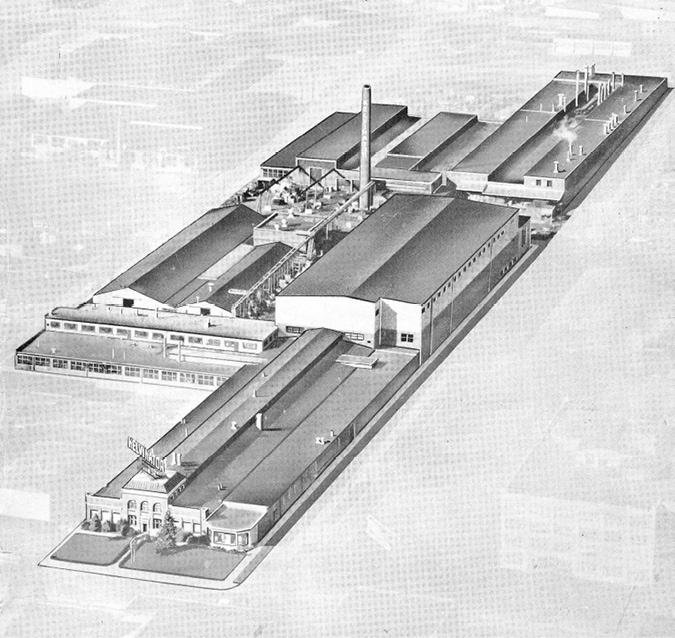
Figure 1. An image of the London Kelvinator plant from the cover of a brochure, c. 1950s.
Stan Ashworth Collection.
Kelvinator in London, Ontario
The trends and perils that Levitt and Watkins described were seen in 1969 when the Kelvinator factory in London, Ontario, was closed by its American parent company. This factory had existed in the city for 43 years at the time of its closure, and the loss of it seemed anomalous in 1969 Ontario. It was, in fact, a harbinger of future plant closures that would plague the industrial economy in Ontario and the northeastern United States. London is centrally located within southwestern Ontario, a short drive away from the north shore of Lake Erie, integrated into the provincial rail system, and equidistant from Detroit, Michigan, Buffalo, New York, and Toronto. Its geographic location allowed London to attract manufacturers and easily export much of its production. Branch plants became increasingly common during the years following World War I as other American firms, including Ford Motor Company, established operations in Canada. The former Ruggles truck factory at 1152 Dundas Street in London became the home of Kelvinator of Canada in 1926. Situated at the city’s periphery in the late 1920s, the plant would eventually be surrounded by working-class neighbourhoods and other manufacturing facilities as London grew after World War II. As seen in Figure 1, the plant grew to a substantial size over time.
Looking back at the 1969 closure of the Kelvinator plant in London provides some important insights into how such events are experienced when they occur, highlights the emerging threat to industrial employment in the late 1960s and early 1970s, and demonstrates the long-term impact that those events have on the working people and communities involved. Closing a factory is often initially portrayed as an economic decision. This is how the August 1969 closure of Kelvinator plant in London was rationalized by its parent company, the American firm White Consolidated Industries. Kelvinator was a well-known home appliance brand in 1960s Canada, with advertisements for its products routinely appearing in newspapers like the Toronto Star.3 There were 500 workers in the plant, including 50 administrative staff, and 340 were represented by uaw Local 27.4
Kelvinator was part of a sequence of different firms. It was founded in Detroit in 1916 and merged with automaker Nash in 1937.5 Nash later merged with Hudson Motor Corporation, and the two became American Motors in 1954. Kelvinator then became part of White Industries in 1968, which was an American industrial conglomerate based in Cleveland, Ohio, that also owned the Westinghouse appliance brand.6 The Kelvinator closure in London, which caused enormous upheaval for the people employed at the plant, was referred to by the company as a “step forward.”7 White Industries owned 69 manufacturing plants across North America, and the aging Kelvinator plant in London was part of that network.8 After its closure, the company decided to simply affix the Kelvinator name to appliances built in other factories. This was a simple business decision, but for workers, their union, and their community, losing the factory was a grievous life event because Kelvinator was London’s most significant plant closure between 1945 and 1970.
Despite its size and prominence in London’s industrial past, Kelvinator is infrequently found in archival sources, and it has not been the subject of historical analysis, although, as will be seen, the impact of the closure was the focus of an academic study conducted shortly after the event occurred. The documents used here come primarily from the private collections of former Kelvinator workers and their families. Archival documents kept in private basements and the vault of Unifor Local 27, reveal how the closure was viewed when it happened. Much of what is written here is also based on the memories of eight former Kelvinator workers and the daughter of another former worker.9
These sources are decidedly varied and provide contrasting insights into the closure. Ink on written documents may fade, and paper may become discoloured, but the information contained therein remains as it was decades ago. Print was a dominant media form in the late 1960s, and the newspaper coverage of Kelvinator’s closure recounted the impact that losing their jobs had on displaced workers. Media outlets moved on to other plant closures and issues as years passed, but people who remembered Kelvinator had strong opinions about why the plant closed, and they all had clear ideas about what the closure meant in their lives. Memory is somewhat different as a research source. As Alessandro Portelli suggests, written sources convey information about events, and oral sources convey meaning.10 Joan Sangster explains how historical memory is shaped by race and class and describes gender as a defining category of analysis, as women and men often remember the past differently.11
The vast majority of people interviewed remembered Kelvinator in a manner that seemed to suggest they had just worked there yesterday. Their memories provided insights into the closure that could not be easily gleaned from written sources. John Groenewegen and Peter Hensels were unionized workers who had emigrated from the Netherlands after World War II. George Medland and Charles Medland were production workers. Russell Mackison and Frank May were supervisors when the closure happened. Maida Miners and Stan Ashworth were non-union clerical workers. Heather Manness worked at the plant as a summer student, but more significantly, her father – Bob Woxman – was president of Kelvinator of Canada for several years. This group of people, while somewhat small, included workers from all principal occupational groups in the factory. These people were not selected through a deliberate sampling method; they all responded to a person-to-person advertisement seeking former Kelvinator workers, placed in a newspaper called The Londoner. Many more than the nine discussed here responded to the advertisement by telephone, mostly to provide their opinion of the Kelvinator closure or to convey an anecdote about having worked there. The interviewees still had strong feelings about the closure, to the extent that each was willing to devote about an hour of their time to talking about the event and what the plant meant to them.
There is broad literature on plant closures in North America in the post–World War II era, and the Kelvinator closure can be readily situated in it. Like the Inglis plant that was the focus of David Sobel and Susan Meurer’s work, Kelvinator predated the war and produced a range of products through its history, from Bren guns to ranges. It was, like the Ransom E. Olds company examined by Lisa Fine, a lower-profile but still substantial industrial organization. The Kelvinator closure happened in a city that had a large manufacturing sector, including plants operated by General Motors, 3M, and Labatt’s, but that was also home to large white-collar workplaces like London Life and the University of Western Ontario. London was not, and still is not, a company town dominated by one employer or industry, which was the situation that Lachlan MacKinnon described in his analysis of a plant closure in Sydney, Nova Scotia. Somewhat like the movement of manufacturing jobs undertaken by rca – a process discussed in detail by Jefferson Cowie – the movement of capital by White Consolidated Industries triggered the Kelvinator closure. Furthermore, as Steven High has shown, Ontario did not undergo a period of substantial deindustrialization during the 1970s and 1980s similar to that experienced in what became the Rust Belt in the United States. In fact, London continued to industrialize after Kelvinator’s closure. The closure thus fits into, and adds to, the broader analytic framework on deindustrialization.12
Working at Kelvinator
Kelvinator opened in London during a period when unionization in Canada had declined following organizing gains made during World War I. Several historians, perhaps most notably Sanford Jacoby, have revealed how employer paternalism and welfare capitalism were practised by different firms in the United States and Canada during the interwar and postwar years as a union avoidance strategy, with firms like Dofasco and Kodak creating programs that were designed to build worker loyalty to the firm while dissuading unionization.13 Kelvinator management practised its own form of employer paternalism. There was an internal newsletter, regular social events, and an overall effort to make working at Kelvinator an experience that transcended simply showing up every day at the factory. Along with company picnics, activities included bowling leagues, baseball teams, and a men’s singing chorus. Most social activities appear to have been geared to the interest of male workers, with some female attendance. Internal newsletters were filled with photographs of new employees and of the various social events that revolved around the workplace. Notices of various kinds were published in the Kelvinator Industrial Association News, such as a 1950 note from the governor of the Bank of Canada congratulating Kelvinator employees on collectively purchasing $126,000 in savings bonds in the previous year.14
Workers were actively encouraged to make suggestions on how to improve the production process, and a total of $2,251.02 was paid out in 1949 and 1950 to employees in the form of cash awards.15 This was a significant sum in the late 1940s – especially in the aftermath of the war years – and workers surely valued the chance to receive a few extra dollars for submitting an idea that would improve production efficiency. Family events like marriages and births were frequently celebrated, and commentary reflected highly gendered views on the domestic roles of men and women (see Figure 2). There was also an employee credit union. Working at Kelvinator was not simply intended to be an economic activity, and the Kelvinator social sphere emphasized the role of the male breadwinner, the standard employment relationship, and women principally as spouses and mothers.
The plant was primarily occupied with men prior to World War II, with the exception of office clerical staff, and pre-war images of Kelvinator social events show a primarily white male workforce. The plant’s racial composition did not alter during the war, but its gender balance changed markedly. Kelvinator management remained male – and indeed, would stay that way until the factory closed – but a significant number of women worked assembling Bren and Sten machine guns during the war. The Bren was a light-duty weapon designed in Britain, and the Sten was a British submachine gun; both were widely used by the Canadian military. Kelvinator mirrored the broader experience of working women in Canada during the war years, as they handled a lot of its production. Workers, male and female, were exhorted by management to do their bit for the war effort. It appears that they did, and they also displayed some shop-floor militancy during those years. Employment in the plant increased during the war years, and this trend mirrored broader employment trends in the city. Al Plumb, a former Kelvinator worker, recalled easily finding employment during the war and, indeed, maintaining more than one occupation at a given time.16 Many of the men who worked in the plant enlisted in the military. A 1942 edition of Kelvinator in Canada listed 48 “head office men” from London who were serving in the armed forces.17
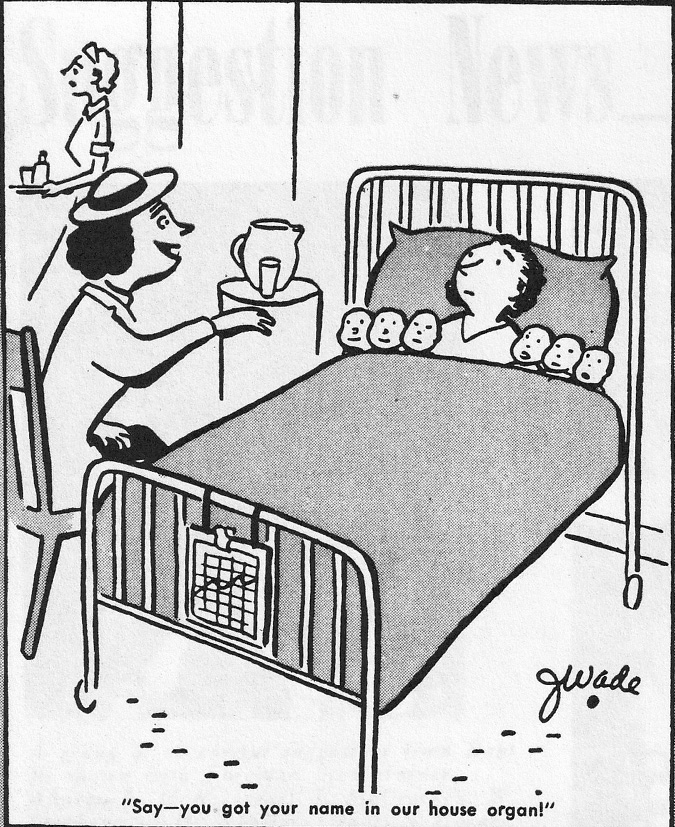
Figure 2. Front page of the Kelvinator Industrial Association News, vol, 4, no. 3 (1951).
Stan Ashworth Collection.
Blue-collar workers at Kelvinator formed the Kelvinator Workers’ Association in 1943. There is no evidence that the association was formed as the result of a strike, but it was undoubtedly the product of worker dissatisfaction with conditions in the plant. Women played an active role in the formation of the association. Documents filed at the time of the certificationdrive reveal that at least 127 of the 329 workers seeking a union were women, and several women also witnessed the formal application that was submitted. Various association committees were established to represent workers, and women were guaranteed positions on two of them representing the Bren and Sten gun lines. The gender composition of the workforce changed after World War II.18

Figure 3. This Sten gun magazine was presented to Kelvinator plant manager Bill Scott during World War II. The magazine was chrome plated to serve as a memento of the plant’s wartime production. It was given to the author by Scott’s nephew Joe Suhr.
Photo by the author.
Despite the move toward collective bargaining that the association’s creation represented, the new agreement did not afford its members the bargaining power that many postwar unions had following the adoption of Order-in-Council PC 1003 in 1944 and, after 1945, the implementation of the Rand Formula. At Kelvinator, there was no formal grievance process or provisions for dues check-off. The purpose of the agreement reached between the company and the association was “to promote a closer co-operation and maintain a constant spirit of good will between the employees and management of Kelvinator of Canada Limited, and in order to establish a more formal procedure for the determination of wages, hours, seniority rights and other working conditions, and for the discussion of all other matters affecting employees.”19 It was, in many ways, a company union, as it gave management enormous control over workers. Charles Medland referred to it as a “shop [meaning company] union.”20
Production in the plant revolved around assembly lines, with workers assigned based on the products being assembled and by occupational classification. Much of the work involved basic assembly tasks, but there were also skilled tradespeople working on parts of appliances, such as refrigeration systems. There was a gendered division of labour at the plant, with men employed in production work and women comprising most of the office staff. The two groups interacted only rarely – when a production worker had to come to the office, for example, or a clerical worker needed to go out to the factory floor. Former workers did not describe Kelvinator as an unsafe environment, but it was an older plant operating in an era that predated modern health and safety legislation. Welding equipment was used, appliances were moved around assembly areas, there was the potential for chemical exposure, and the plant lacked modern climate control. Although 37 years had passed since Russell Mackison left Kelvinator when he sat for an interview to discuss it, he only needed to look down at one of his hands, missing a finger, to be reminded of the dangers associated with working in the plant.
The workplace was paternalistic, managed by a coterie of white men, and was thrown into some upheaval in 1953 when the production workers at the plant decided to opt for unionization with uaw Local 27. The involvement of Kelvinator’s workers with this local had a marked impact on their working lives, which continued after the plant’s closure. Local 27 had formed in 1950 when Eaton Automotive attempted to avoid the uaw in Windsor by opening a plant in London. A General Motors Diesel plant opened in London in 1950, followed by a Minnesota Mining and Manufacturing Company (3M) plant in 1952, and both organized through Local 27. Although Eaton Automotive was the first bargaining unit certified, General Motors Diesel was the first to conclude a collective agreement in 1951. Local 27 became a composite local and certified other bargaining units in the 1950s, but Kelvinator, General Motors Diesel, and 3M were the largest ones during those years. Another workplace of similar size and influence was certified in 1968, when the Northern Electric plant was organized. Kelvinator was unique in that it predated the World War II era, while the other major Local 27 units were all postwar plants.
It is difficult to determine the exact origin of the events that led up to Kelvinator’s workers joining the uaw, but it is still possible to glean much of the reasoning behind this move from the memories of former workers. Although Kelvinator management dominated the workers’ association, they did so while maintaining a perception of fairness among the workers. Charles Medland, for instance, recalled the respect that factory staff had for Kelvinator general manager Charles Hadden.21 Hadden led the plant immediately after the war and reputedly knew every worker by his or her first name. He did not act aloofly when dealing with workers and instead appears to have taken an active interest in their activities. For example, Hadden congratulated the Kelvinator hockey team on a successful season by giving the players new leather and melton jackets when they attended a dinner at the Palm Grove restaurant in London as guests of management.22
For workers, the rigid hierarchy of the plant and the occasionally controlling behaviour of the foremen were balanced by the knowledge that Charlie Hadden knew your name and might even buy you a nice dinner if you did something significant to raise the company’s profile. George Medland recalled that Hadden would respectfully listen to the bargaining requests put forward by the association, and a bargaining settlement would be offered by the company that was close to the agenda put forward by the workers. Kelvinator management was undoubtedly aware of labour-management conflict in other workplaces where a more formal collective bargaining relationship existed and probably felt that agreeing to the association’s wage requests was a small price to pay in return for operating within a bargaining framework that gave enormous power to management.
However, the paternalist management system failed in the 1950s, as the managers who oversaw the paternalist system were replaced by people who were less adept at negotiating the intricacies of the system. George Medland recalled that new management felt that the workforce was already being paid competitive wages, and the practice of listening to the workers association’s bargaining requests ended.23 This was a poor decision, as the contract language bargained by the uaw gave the workers far more influence over the workplace than they had previously exercised as members of the association. Achieving gains through the uaw did not come easily, and there was a strike in 1954 after workers joined their new union. Management also attempted to fire the members of the union’s bargaining committee.24 Workers tried to prevent trucks from shipping equipment out of the plant during the strike; London Township police were called out and fired their guns several times into the ground in front of the strikers and into the air over their heads to stop them from damaging company property.25 The entry of the autoworkers’ union brought significant improvements for its members, but union membership remained confined to the shop floor. A 1958 uaw campaign to organize the Kelvinator office staff led to certification but then culminated in a 1959 decertification drive as management refused to negotiate while encouraging a decertification campaign. Stan Ashworth, one of the former employees interviewed, led the decertification drive.
Work relations were thus hegemonic, with an apparent assumption by both parties that management had ultimate control of the plant but that factory workers would also receive respect and recognition of their contributions to the firm. The senior executives who had replaced Hadden were not as skilled at negotiating this relationship. Both George Medland and Maida Miners recalled several changes to senior management following Hadden’s retirement from the company. Miners attributed the start of the company’s decline to management changes in this period.26
The closure came as a surprise both to the community and to many of the plant’s employees when it was announced in February 1969. Kelvinator foreman Russell Mackison learned of it while listening to the radio during his drive home from work.27 The London Free Press called the closure a “regrettable case” and urged the federal government to introduce legislation requiring companies to give six months’ notice of pending plant closures.28 The London Free Press reported that 500 workers would lose their jobs, and Kelvinator management indicated that the company would now focus on sales, distribution, and service functions.29
The closure attracted an immediate response from uaw Local 27. This was a large composite local that included several other bargaining units in London, such as General Motors Diesel and 3M. The union was in negotiations with the company at the time of the announcement of the closure, but uaw staff representative Bob Nickerson stated that there had been no indication at the bargaining table that the plant might close. He and Bill Froude, a Kelvinator worker and Local 27 president, immediately brought forward concerns about the long-term prospects of the plant’s workers, particularly the fate of many older employees. The union estimated half of them to be over age 50.30 Froude himself was part of this group. The London Free Press stated that 100 office workers had been fired shortly after White Industries took over the plant the previous year.31 Curiously, this mass firing does not appear to have served as a warning to the union of what could happen to bargaining unit employees.
London was also the home of Ontario Progressive Conservative premier John Robarts, who took an active interest in Kelvinator’s demise. Provincial and municipal politicians met with a union delegation led by Froude on 22 February 1969.32 That group included Robarts, London mayor Herb McClure, members of a city council special committee, and two London-area members of provincial parliament (mpps) who were also cabinet ministers. Robarts told the London Free Press that the provincial government had faced similar issues in the past, such as the collapse of the uranium industry at Elliot Lake, Ford Motor Company’s move from Windsor to Oakville, and the closure of locomotive repair shops in Stratford. Robarts concluded, “The problems work themselves out in time. Stratford’s in good shape now. But it’s the transition period that’s often bad.”33 There would consequently be no comprehensive government response to the closure, and there was certainly no serious discussion of government subsidies to encourage White Industries to keep the plant open. The late 1960s were a period long before governments intervened in plant closures, never mind throwing enormous financial subsidies at companies to attract new factories or keep existing ones operating.34 This was also a period before the uaw, and its successor unions the Canadian Auto Workers (caw) and Unifor, linked the union’s political strategy to the pursuit of government incentives to support manufacturing.35
The response of both the city and provincial government to the closure was influenced by new industrialization outside of London’s southern periphery. A Ford assembly plant had recently opened in Talbotville, Ontario, the same year White took control of Kelvinator. Talbotville is a hamlet located approximately a twenty-minute drive south of London and north of St. Thomas. Local politicians hoped that displaced Kelvinator workers would find employment at Ford, but there were no guarantees from Ford that this would happen.
The union continued to press its concerns about unemployment and pension benefits. The Local 27 president sent letters to various legislators and government commissions, including the Pension Commission of Ontario, to protest how Kelvinator pension benefits were being calculated. In one of those letters, Froude shared with Oshawa New Democratic Party (ndp) mpp Cliff Pilkey the plight of a woman married to a Kelvinator worker who had 32 years of service when he died. Although Kelvinator agreed to surrender any claims to money contributed to the pension plan on behalf of employees, the deceased worker’s widow would only receive her husband’s contribution to the plan plus interest of 2 percent on those contributions and 3 percent on the remaining balance. Froude, feeling that the pension terms were inadequate, vowed that “it is our intention to raise hell in particular to bring these kinds of situations to the attention of the general public and try [to] make some badly needed changes in this area.”36
The local followed through on Froude’s vow when its members staged two separate protests at the office of pension administrator Standard Life on Queen’s Avenue in London. Russell Mackison, who returned to the union ranks after being a foreman, attended both demonstrations but did not feel that they made a difference.37 The factory shop committee felt compelled to issue an emergency bulletin asking people to stop deliberately damaging fridge and freezer cabinets, arguing that continuing to do so would cause the company to accelerate the phase-out of the plant.38 A wildcat sit-down strike occurred on 19 and 20 March 1969 over pension and severance pay.39 The actions that took place in the plant illustrate the extent of workers’ anxiety and fury at what was transpiring in the spring of 1969.
Local 27 eventually managed to conclude an agreement with Kelvinator that would address some of the workers’ issues. Limited medical coverage would continue, and some group life insurance coverage would also be maintained, but the company would cease contributing to the supplementary unemployment benefit fund and would instead increase all hourly rates by five cents per hour – which would have, presumably, increased the amount of severance that would be paid to each unionized worker. Pension contributions would be vested for employees aged 45 and older with twenty years of service. Workers also had the option of taking a cash buyout. Severance pay would be $28 for every year of service, with a minimum payment of $200. These are the final terms on which the last Kelvinator employees left the plant when it closed in August 1969.40 The benefits negotiated by the union were regrettably finite, while the impact of the plant’s closure was more enduring. The union’s political response to the closure was to lobby local politicians directly, to protest the closure to company executives, and to secure future employment, pension, and supplementary unemployment benefits. Why did the union react in this manner? The closure happened in only a few months, but it destroyed decades of effort by the union to create adequate working conditions and economic gains.
Kelvinator workers secured a decent standard of living through their union, particularly wages and benefits that could sustain a family and some degree of income security when they wanted to retire. Unionization brought an effective grievance procedure and a genuine voice for union members in the workplace. Achieving a stronger voice and better economic rewards had been a struggle waged primarily by male workers, and the gains they made through union membership were attained in an environment that could be harsh. For immigrant workers like Peter Hensels, working at Kelvinator meant not only gaining acceptance in a Canadian workplace but also often encountering discrimination. Hensels recalled, “I worked as an inspector as I didn’t need to know how to speak English … you know, checking the back panel of the refrigerator. I later went to work in the back at the stamping plant.” Other immigrants from the Netherlands were hired, as were Eastern Europeans; they experienced overt discrimination from the Canadian workers. Hensels recalled them “calling us this and that” and, further, that the bosses “were the worst.” Attaining better economic rewards and union representation was thus a struggle waged against not just management but also the working conditions in the plant. Altering those conditions by making the workplace safer and more accepting of newcomers to Canada was a major part of what workers achieved, all of which was lost when the plant closed.41
Aftermath of the Closure
The closure was covered extensively in the London Free Press. That paper, controlled by the Blackburn family in the late 1960s, was no friend of organized labour but often covered issues relating to industry in London. The Blackburn family were the founders of the London Free Press and also owned the local television station along with several radio stations; they were in a position to wield enormous influence over public opinion in the city and surrounding area. Terms like “age discrimination” and “precarity” were not in usage in late 1960s Canada, but those things were experienced by displaced Kelvinator workers. Anthony Luckman, a 21-year employee who was aged 63 in 1969, told the paper that he had to face the “humiliation” of trying to find work and that “they just laugh at you if you’re over 40.” He added that his wife, Mrs. Luckman, “just went hysterical” at the news of the plant’s closure. Luckman had little savings, perhaps enough for three months, and anticipated a pension of only $70 per month until he would be eligible for a government pension. His circumstances were likely mirrored by those of other Kelvinator employees of similar age and tenure.42
The London Free Press even followed up a year after the plant’s closure with an article on what had happened to some former workers. Albert Lee, a former receiving clerk, had taken a special education course at the London Teachers’ College and subsequently found employment. The paper reported that Lee ultimately felt positive about Kelvinator’s closure as he had been able to get away from factory work. Clar Kelly had founded his own driving school, while Elwin Pierce concentrated on the farming operation that he owned in Mount Brydges, Ontario. Albert Cornelus had found work as a carpenter at Simpson’s.43 Simpson’s and Simpson-Sears were separate.
The human-interest stories in the London Free Press masked serious problems that former workers faced in the year following the plant’s closure. The Kelvinator case attracted the attention of Bernard Portis, a professor at the business school at the University of Western Ontario. Portis conducted a one-year study of displaced Kelvinator workers that was done with full co-operation from Local 27. Some of his findings, which were reported in the newspaper, were discouraging. While 81 per cent of workers under 40 had found work, only 55 per cent of those aged 40 to 50 and barely 21 per cent of those over 60 were so fortunate; in all, only 59 per cent of former workers had found employment. The Luckman family’s worst fears were surely realized. A 50-year-old former worker named Chester Devine discussed waking at 6:30 every morning, as he had while working at Kelvinator, yet not having anywhere to go. Portis concluded that little had been done to assist the former Kelvinator workforce.44
Losing decent employment at age 50 was obviously cataclysmic for many workers, and the financial impact would have been challenging. There were two workers at the plant – M. T. Pearen and F. C. Wallace – whose seniority dated back to 1927, which means they had been there nearly as long as the plant had been in operation.45 Those collecting a company pension would have had to rely heavily on government pensions to survive. Luckman would have had some good news, as he and 27 other employees who were 60 to 65 years of age were eligible for increased pensions should any additional funds accumulate in the pension plan.46 However, this increase would likely have been small. What the newspaper showed was the importance of the standard employment relationship (ser) in workers’ lives. As Mark Thomas has noted, the ser revolved around secure employment for male breadwinners, regular working hours, and a wage rate that could support a family.47 The closure took all those things away from workers.
For some, including Hensels, working at Kelvinator was the first substantial employment that they had found after arriving in Canada. Others, like Froude, became union activists through working at the plant. Some, like Mackison, carried injuries suffered at Kelvinator for the rest of their lives. All of them had experienced the often confrontational labour-management relations in the plant and had gone on strike to protect what they had gained in the workplace. Losing employment at Kelvinator meant losing a connection to what had often been difficult life experiences.
What subsequently happened to the Kelvinator workers mentioned in the local media is unknown. The London Free Press moved on to other news stories. London, as a community, did not dwell on the closure. The government expectation that displaced workers would find employment at Ford Talbotville was hardly a comprehensive response to the closure of a major plant, though many younger Kelvinator employees did indeed manage to secure employment there; they were not part of the disadvantaged group described by Portis. Local 27 officer Carl Schoffer told the London Free Press that some men had found work at Ford, Kellogg’s, and Eaton Automotive prior to the complete shutdown of Kelvinator.48
Peter Hensels and John Groenewegen obtained employment at Ford, but they had differing experiences there. Groenewegen called in sick to Kelvinator for three days while the plant slowly wound down so that he could try working on the line at Ford, but he quickly found that he disliked it.49 Hensels worked at Ford for three years before suffering a back injury that placed him on disability.50 Both remembered working with other former Kelvinator employees at Ford.51 The informal government expectation that employment at Ford would help alleviate Kelvinator job losses was partially borne out. Unfortunately, for younger workers, working at Ford was not necessarily as rewarding as working at Kelvinator had been, as work on the Ford assembly line was more rationalized, and workers had less discretion over the production process. Workers believed that they made quality products at Kelvinator, but those who went to Ford felt less enthusiastic about the cars coming off the Talbotville line.
Workers who left the Kelvinator plant in the summer of 1969 entered into a different job market than they had known in the late 1950s and early 1960s, when finding work appears to have been easy. Interviews suggest that non-unionized Kelvinator employees may have encountered more difficulty finding work after the closure than their unionized counterparts. There is no single clear reason for this trend, but there are some possible explanations for it. Some Local 27 members succeeded at finding employment thanks in part to the circumstances in which they worked at Kelvinator. Groenewegen, for example, had learned to repair refrigeration systems at Kelvinator, and eventually started his own service business.52 Albert Cornelus worked in production at Kelvinator, but his carpentry skills led to his job at Simpson’s.53
Younger, non-union staff, however, faced greater challenges. They had worked all year round without interruption and never needed to arrange extra employment during a layoff, so there was less likelihood of them having other work on which to rely. Indeed, the former non-unionized workers interviewed did not report other sources of employment during their years at Kelvinator. In contrast, some unionized workers had access to additional sources of employment. For instance, Edwin Pierce was already operating his farm on a part-time basis prior to the closure.54
Whether unionized or non-unionized, workers had typically earned high school diplomas or completed some years at high school prior to working at Kelvinator. Their training was often vocational, and they often pursued such training further after leaving the plant. Clerical worker Stan Ashworth pursued a commercial course of study that emphasized bookkeeping.55 Rose Hurt, also a former clerical worker, studied at a business college.56 Former foreman Frank May studied drafting. May did not encounter much difficulty finding work, and was soon employed by 3M.57 Regardless, he recalled several former colleagues at Kelvinator having difficulty finding work after the closure:
It was a tough time for some people. There were a lot of guys who I had over to the house … they weren’t ultimately friendly, but I had them over for supper because I felt bad for them. I tried to help them, but it really wasn’t my place to get them a job. I felt bad for them … they just could not get a job.58
May also attributed the trouble that former colleagues had with finding work to the vicissitudes of the office environment. Hurt worked at a series of clerical jobs after the closure, and Ashworth also attempted to attain a certified general accountant designation and described himself as having had a lot of trouble with it.59
Unionized workers had more success with finding jobs that were comparable to the ones they had at Kelvinator. They were able to more quickly apply the skills that they learned at Kelvinator, or to apply other knowledge – as in the case of Albert Cornelus – to new jobs. Non-unionized workers, such as Ashworth, had not acquired skills that could assist them with finding employment similar to their work at Kelvinator. Furthermore, Local 27 had publicly promoted measures to assist its members, such as the idea of displaced Kelvinator workers being employed at the new Ford Talbotville plant.60 Non-union workers did not have a similarly strong advocate, though Ashworth did recall a Kelvinator personnel manager named Joe Ryan who was instrumental in helping at least some displaced workers find new jobs.61
Media and Memory
The coverage of Kelvinator workers in the London Free Press reveals some important aspects of how one plant closure received media scrutiny. Much of the paper’s coverage was highly gendered. For example, Anthony Luckman may have been just as “hysterical” as his (unnamed) wife, while she could have felt as humiliated over the closure as he did. Virtually all the coverage in the paper focused on unionized workers, which reflected Local 27’s success in publicizing the plight of its displaced members. The Portis study, with its similar focus, further reinforced this perception. Media coverage of the closure partially foreshadowed how plant closures would be reported in the 1970s and 1980s: images would invariably show sullen, often angry blue-collar men streaming out of factories, wondering where they could possibly obtain new employment. It also meant that the plight of anyone who worked in a non-unionized job was essentially lost to posterity.
The portrayal of the Kelvinator plant closure as an event that principally hurt unionized workers was a public relations victory for the union, as Local 27 made it seem as though it spoke for every worker in the plant. Saying that 500 workers were losing their jobs was more impactful than declaring that a little over 300 were going to be out of work. Using this strategy to deal with local media ensured that virtually every newspaper article quoted union officials like Bob Nickerson, Carl Schoffer, and Bill Froude or rank-and-file members. London Free Press labour reporter Julian Hayashi was a frequent visitor to Nickerson’s office, and the union made full use of his visits to convey its position on the closure.62 When John Robarts and Herb McClure met with worker representatives from the plant, it was with union representatives, not a delegation of non-union staff. This, in turn, may suggest that the premier and the mayor viewed the closure as an issue pertaining only to unionized workers. The closure became an event that featured a binary relationship between senior White Industries executives, on one side, and unionized workers and their leaders, on the other side, with the latter group receiving far more attention than the former.
Coverage of the closure became an account of unionized, working-class job loss. Oral histories are thus important because they show what happened to people who were not unionized or part of the working class. It is here where Heather Manness’ recollections of her father, Bob Woxman, prove most valuable. Workplace studies in the past four decades have told us much about the lives of working-class people, but we have learned regrettably little about the managers and executives who ran corporations. What did a plant closure mean for a manager or chief executive? Rosabeth Moss Kantor’s study of white-collar workers in a major American technology firm provides some insights. She persuasively illustrated that the workers she studied were shaped by the firm that employed them.63 Her account indeed suggests that the higher a person rose in the organization, the more grievous would be his or her separation from it. William H. Whyte observed that an executive is “so completely involved in his work that he cannot distinguish between work and the rest of his life – and is happy that he cannot.”64 Losing a senior position in a company thus meant losing more than just a job.
Manness certainly added to what Moss Kantor and Whyte argued. She remembered her father working “long, long hours,” noting that “as a kid, we hardly saw him.” She further stated, “I am sure that there were a lot of people who hated him … in upper management, there are a lot of people who hate you because of your position, but there were a lot of people who admired and respected him.” Woxman left the company just prior to the plant’s closure, but his life was still influenced by it. His daughter was willing to discuss the closure and how it influenced her father’s working life thereafter, but her brother and mother found their memories of the closure and its effect on Woxman too painful to recount – even though decades had passed:
1968 is when he quit … he started in 1960. He left in 1968, just because it became a big problem [the sale to White Industries]. He knew what was going to happen … what was going to be happening … he wasn’t going to be there anymore and the people that he loved and worked with were going to be out of a job. He put so much of himself into it … expanding the Kelvinator name … not just here, but internationally. My brother and my mother felt that their lives were never the same [after the closure]. They lived with the trauma, because Dad was so depressed.
Manness recalled that her father spent most of the day of the closure circling his yard on a lawn tractor. Woxman, who had come to Canada from the United States, eventually found employment in 1969 running a company in Toronto called Conduits International, but his position in London’s business community was lost. He had been an active member of both the London Hunt and Country Club and the London Club.65 George Medland recalled hearing that a heated confrontation had occurred when White Industries executives first arrived at Kelvinator to meet with the latter’s management team.66 The takeover was not amicable. According to the Globe and Mail, some Kelvinator executives had been fired shortly after the White Industries takeover.67 Woxman may have wished to avoid having to endure a similar experience and left before being forced out.
Woxman would have been aware of the impact of the closure on rank-and-file workers, even if only through media coverage. Former workers were likely not aware of the impact that it had on him. They did not hold Woxman in the same esteem as they did managers like 1940s-era plant manager Charles Hadden. Former Kelvinator foreman Russell Mackison remembered:
For the first few years he [Woxman] was okay. In the last few years, the screws started to tighten [management practices]. Once in a while, he would walk through [the shop floor], with some executives from Detroit or something like that, but not too much.
These observations are a contrast to Manness’ recollections of her father. She saw an engaged corporate leader, while the workers saw someone who was demanding and aloof.68
Former Kelvinator workers expressed different opinions about why the plant closed. George Medland blamed Woxman for it, and Stan Ashworth believed there had production problems and difficulties securing new customers for the plant’s products. He referred to the loss of a contract with department store Simpsons-Sears as a particular issue for the plant. When asked about the Kelvinator plant’s profitability, Ashworth (who worked in administration) said that people there referred to the plant as “a non-profit, charitable organization” with net profits ranging between 2 and 4 per cent every year. Frank May believed that a long effort to build a frost-free refrigerator had been detrimental for the London plant. It is understandable that workers would try to identify exactly why their workplace closed and they lost their jobs, but the fact is that White Consolidated Industries caused the closure, regardless of what was done by anyone at the plant, including Bob Woxman.69
Unionized workers were both Local 27 members and Kelvinator employees. They could thus identify with, and form allegiances to, both the union and the company if they wished. However, for non-unionized workers like Woxman, there was only the identity of Kelvinator worker. Woxman is the only person mentioned in the various employee interviews who actually purchased an amc car – a Rambler. This was not exactly the model of vehicle that a 1960s corporate executive would normally have driven, but Woxman did so out of loyalty to amc. Manness said that “he always wanted to drive a Cadillac but ended up driving a Rambler [which was an economy car] … we even had a pink one.” Woxman even wrote a Kelvinator radio jingle: “Sooner or later, you’ll discover Kelvinator.” His personal identity was inextricably linked to the plant.70
Kelvinator’s Legacy
The consequences of the closure for London as a community were less obvious in 1969. Kelvinator was no longer on the city’s periphery when it closed. A working-class neighbourhood had grown around the plant, and many Kelvinator workers resided within walking distance or a short drive of it. The new plants that had been constructed in London, such as Northern Electric and Ford, were either on the periphery or beyond. Anyone working at them would require a car, as there was no public transit to them. The fact that the factories of Northern Telecom, 3M, gm, and others were still in the city made the Kelvinator closure a serious anomaly in what seemed like continuing industrial growth, but this was an illusory view. The city’s industrial future did not work out as Premier Robarts predicted. Kelvinator’s closure was the beginning of a process that saw other major employers in the city either closing or substantially altering their operations. Eaton-Rich closed in 1971, and Labatt’s Brewing moved its head office to Toronto a few years later. Other large manufacturing firms, including General Steel Wares, also closed. Canada Trust, London Life, and other major financial firms became more dependent on business activity in Toronto and other major cities. London gradually became a city of branch offices rather than corporate headquarters, but the city still appeared prosperous.
The Talbotville Ford plant was constructed largely as a result of the 1965 Canada–United States Automotive Products Agreement (commonly called the Auto Pact). The automotive sector, while already a vital part of the Ontario economy, would continue to be central to the province’s economic future. It became increasingly important to London as many new and existing manufacturing facilities, often organized by Local 27, came to depend on the automotive business; these included the Firestone and Bendix factories, both of which became Local 27 bargaining units. Robarts perhaps did not consider that cities like London were increasing their reliance on the automotive industry to provide industrial employment.71
Local politicians did not begin to worry seriously about this trend until it was well underway; they were not as concerned as Kari Levitt and Mel Watkins were about foreign ownership of industry in Canada. A variety of factors may have influenced their tepid response. London’s population had grown significantly since World War II. In 1951, the city’s population was 95,343, and it increased to 194,416 by 1966.72 Much of this increase was due to the arrival of immigrants like Peter Hensels and John Groenewegen. Manufacturing employment continued to improve during this period, with the employment index in the sector increasing by 23 percent between 1961 and 1967.73
The city’s political leadership did not have a defined policy of trying to attract or retain industrial employers. Former mayor Jane Bigelow, who was serving on London’s board of control at the time of the Kelvinator closure, recalled that the city acquired land for future industrial use but did not have much of an industrial strategy beyond that.74 The city administration’s reaction to the closure was not unusual. The Kelvinator closure would have seemed anomalous to London’s business and political leaders, as they had experienced nothing but growth in recent decades and thus shared the provincial government’s perception. Ford’s presence in Talbotville in 1969 and its ability to hire some of Kelvinator’s laid-off staff lulled London’s political establishment into thinking things would remain the same as they had since the end of World War II.
The broader union movement pointed to Kelvinator as an example of what could happen to manufacturing facilities elsewhere in Ontario and beyond. The Ontario Federation of Labour commissioned a study in 1971 that referred to the Kelvinator closure as an example of the kind of event that required a comprehensive government response to plant closure and further concluded that Portis’ research on the plant may have contributed to the Ontario government’s decision to introduce plant closure notification legislation.75
The union local that had so vigorously represented the Kelvinator workers in negotiations, then deftly turned the closure of the plant into the exclusive plight of its members, was not grievously harmed by Kelvinator’s closure. Local 27 prospered, growing to add more bargaining units in the years following the closure. Its membership totalled 3,000 in 1969, and it continued to grow through the 1970s.76 The local became an ever more prominent part of London’s labour movement, and of the autoworkers’ union. The major impact of Kelvinator’s closure was a change in leadership. Bill Froude was no longer Local 27 president when the plant closed, as he was no longer a dues-paying member; he was part of the group of older employees who could potentially collect enhanced pensions. The local opened a new building in 1967, and it eventually named the auditorium Bill Froude Hall. Froude was replaced as president by Al Campbell, who was unit chair at Eaton Automotive. Froude and Campbell had both spent years on the Local 27 executive, and Campbell’s assumption of its leadership marked a significant political change. While Froude supported the ndp, Campbell had been a Communist.77
A year after the closure, union staff representative Bob Nickerson told the London Free Press that unions would expect better protection from plant closures through the inclusion of clauses in their collective agreements that guaranteed advance notice of a closure, job retraining, and the ability to transfer to other plants owned by an employer engaging in a closure. He commented that “we see these as strike issues if they aren’t in new contracts.” Nickerson enjoyed a noteworthy term as the Local 27 staff representative. The local waged some major strikes during his years as its representative, and he eventually became national secretary-treasurer of the caw when it split from the uaw in 1985.78
Conclusion: Kelvinator and Deindustrialization
As noted at the beginning of this discussion, the circumstances of the Kelvinator closure fit into the broader literature on deindustrialization, but the period afterward does not entirely fit into that analytic framework. For example, Steven High has persuasively argued that industrial ruins become “memory places” where people – often displaced workers – reflect on the loss of industrial work.79 It took the Kelvinator plant and the deindustrialized area around it decades to become a place of memory. Unlike communities such as Youngstown, Ohio, London was not immortalized in song because of deindustrialization – until 2012, when a song was written and performed about the closure of the city’s Electromotive plant.80 The wrecker’s ball, a symbol of deindustrialization across North America, did not take on such meaning in London in the 1970s.81
There are important reasons that the Kelvinator closure adds to our understanding of deindustrialization. Oral history, which has been used in studies of deindustrialization, is clearly essential to understanding the meaning of a manufacturing plant’s closure. Alessandro Portelli has correctly noted that oral history sources are not objective.82 Heather Manness would naturally be more inclined to speak favourably of her father, for example, than would a former production worker who was not related to him. Furthermore, as Daniel James has suggested, life stories “make use of a wide spectrum of possible roles, self representations and available narratives.”83 This insight does not diminish the utility of oral history when analyzing deindustrialization, since all sources come with some biases; this is particularly true when trying to study the loss of a manufacturing plant that is scarcely found in archival data. More important is the issue of whose memories are included in oral history. Former Kelvinator workers were the only group that remembered the plant. It was also obvious that the impact of job loss on employees at all levels of an organization, not just union members, must be considered.
We see in the case of Kelvinator that non-unionized workers often had a more difficult time coping with the closure than did those belonging to uaw Local 27. Media coverage did not fully reveal the impact of the plant closure. Historians who look back on the job losses that have occurred across North America since the late 1960s should be mindful of how the media covered similar losses at places like Kelvinator and of whose voices are recorded for posterity. The case of Kelvinator also shows that the loss of a plant has lasting effects even when it does not appear to be immediately cataclysmic. Indeed, closures like this could be more dangerous for communities and workers if they do not seem to be particularly problematic at the time that they occur. Most importantly, as Jefferson Cowie and Joseph Heathcott have argued, and as the nature of the Kelvinator closure further shows, “deindustrialization is not a story of a single emblematic place, such as Flint or Youngstown, or a specific time period such as the 1980s; it was a much broader, more fundamental, historical transformation.”84
A plant closure becomes a statistic, and public memory of it eventually fades. There is a remaining section of the Kelvinator plant that has for several years been home to a used car dealership. As seen in Figure 4, nothing about it suggests that it was once the home of a large and thriving workplace. What happened after the closure of the Toronto Inglis plant, described by David Sobel and Susan Meurer, was similar. A neon Inglis sign that had been part of the plant was visible from the Gardiner Expressway in Toronto for many years after that plant closed, but few commuters may have known what Inglis was, if they actually paused to think about it at all. There are some instances in the London area of a former factory being successfully repurposed and brought back to economic life, most notably the former Kellogg’s plant that was almost directly across the street from Kelvinator and is now home to several businesses including a Hard Rock Hotel. The site of the Ford Talbotville facility, which was also the home of a militant autoworkers’ local, is now occupied by a fulfillment centre owned by notoriously anti-union Amazon.
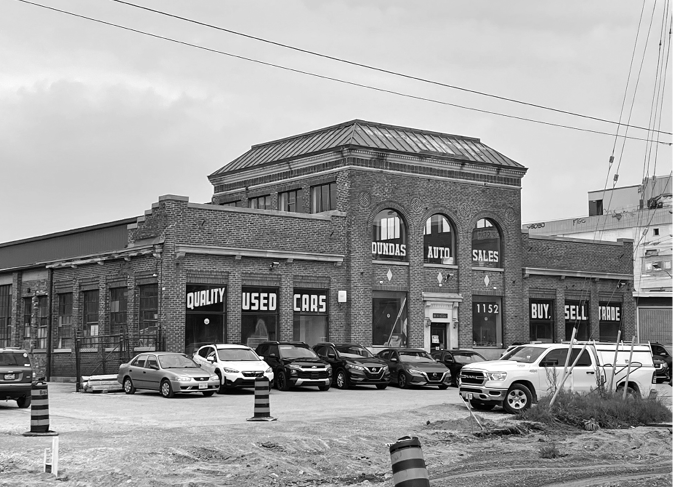
Figure 4. The remaining front of the Kelvinator plant, 5 June 2025.
Photo by the author.
Kelvinator was part of the transformation described by Cowie and Heathcott, but the plant still existed in the memories of its former workers. It was not a Canadian- or American-owned factory in their minds; it was their factory. They gathered for reunions in 1990 and 1991. The 1991 reunion was held at the Victory Branch of the Royal Canadian Legion, on Oakland Avenue in London and only a few city blocks away from the former Kelvinator site. The notice of the event, held in late September, could have been lifted from an old edition of the Kelvinator Industrial Association News, such was its tone and content. A reunion planning committee comprising seven people, including Stan Ashworth, organized the event. A dinner with social events was planned, and 182 former workers attended. This was clearly less than the overall number of people working in the plant when it closed, but the remembrance of their identity as Kelvinator workers and union members still loomed large in their lives.85

Figure 5. Smokestack District mural, by local artist Grace Murray, in London, Ontario, 5 June 2025.
Photo by the author.
The area of London in which Kelvinator was located has recently been named the Smokestack District, and a new mural depicting its former industrial facilities has been painted on the former Webster Air building at the southeast corner of King and Eleanor Streets, which is a block south of the old Kelvinator location. The mural includes images of Kellogg’s, McCormick’s, Empire Brass, and, as seen in Figure 5, the Ruggles/Kelvinator factory. The area has finally become a memory place. The people who agreed to be interviewed about Kelvinator did so almost twenty years ago, and many if not all of them are now gone. They would have loved seeing the mural on Eleanor Street.
Former workers who shared recollections of their employment at Kelvinator had varied memories about how the loss of the plant impacted their lives. For example, George Medland became a long-haul bus driver and clearly liked that work more than being at Kelvinator. John Groenewegen used the training he acquired at Kelvinator to build his own refrigeration contracting business. Russell Mackison went to General Steel Wares in London, another appliance manufacturer, and became heavily involved in the union representing its workers. Stan Ashworth, who had led the office decertification drive, never recovered from the closure; he said that he had not thought that Kelvinator would ever end. Bob Woxman, who seems to have shouldered much of the blame for the closure, may have felt the legacy more acutely than any other former employee. All these workers accomplished much during their years at Kelvinator. They earned good wages, learned skills that they applied in subsequent jobs, and built social lives within the plant, and many became union members for the first time. As the last workers walked out through the plant’s gates in August 1969, there is little doubt they knew how important Kelvinator had become in their lives, and perhaps they pondered the impact that its closure would have on them now that the plant was gone.
1. See Kari Levitt, Silent Surrender: The Multinational Corporation in Canada (Toronto: Macmillan, 1970).
2. Canada, Privy Council, Foreign Ownership and the Structure of Canadian Industry: Report of the Task Force on the Structure of Canadian Industry (Ottawa: Queen’s Printer, 1968) (hereafter the Watkins Report), 427.
3. See, for example, “This Expert Recommends Kelvinator,” Toronto Star, 1 June 1966.
4. “Kelvinator Informs 340 Workers London Plant to Be Closed Soon,” Globe and Mail, 8 February 1969.
5. “Kelvinator Corporation,” Encyclopedia of Detroit, Detroit Historical Society, accessed 15 July 2025, https://www.detroithistorical.org/learn/online-research/encyclopedia-of-detroit/kelvinator-corporation.
6. “White Consolidated Industries, Inc.,” Encyclopedia of Cleveland History, Case Western Reserve University, accessed 15 July 2025, https://case.edu/ech/articles/w/white-consolidated-industries-inc.
7. Internal Kelvinator correspondence, 11 February 1969, Local 27, 1960–1969, uaw Local 27 (hereafter L27A). Local 27 has an archive of documents and images housed at the uaw Local 27 (now Unifor) hall in London, Ontario.
8. List of White Consolidated Industries facilities, 1 July 1968, Local 27, 1960–1969, L27A.
9. Semi-structured interviews were conducted, and the interviewees were found through an advertisement placed in a publication called The Londoner. The subjects agreed to let their actual names be used.
10. Alessandro Portelli, “What Makes Oral History Different,” in Robert Perks and Alistair Thomson, eds., The Oral History Reader, 2nd ed. (New York: Routledge, 2006), 36.
11. Joan Sangster, “Telling Our Stories: Feminist Debates and the Use of Oral History,” Women’s History Review 3, 1 (1994): 7, doi:10.1080/09612029400200046.
12. See Steven High, Industrial Sunset: The Making of North America’s Rust Belt, 1969–1984 (Toronto: University of Toronto Press, 2003), for a comparative discussion on plant closures and deindustrialization in the United States and Canada. Lachlan MacKinnon, Closing Sysco: Industrial Decline in Atlantic Canada’s Steel City (Toronto: University of Toronto Press, 2020). Lisa Fine has written about the role of the reo Motor Company in the lives of its workers in The Story of reo Joe: Work, Kin, and Community in Autotown, U.S.A. (Philadelphia: Temple University Press, 2004), and Jefferson Cowie examines rca in Capital Moves: rca’s Seventy-Year Quest for Cheap Labor (New York: The New Press, 1999). David Sobel and Susan Meurer examine a case study similar to Kelvinator in Working at Inglis: The Life and Death of a Canadian Factory (Toronto: Lorimer, 1994).
13. See Robert Storey, “Unionization versus Corporate Welfare: The ‘Dofasco Way,’” Labour/Le Travail 12 (Fall 1983): 7–42; Sanford Jacoby, Modern Manors: Welfare Capitalism since the New Deal (Princeton, New Jersey: Princeton University Press, 1997).
14. Kelvinator Industrial Association News 3, 5 (1950), p. 2, Stan Ashworth Collection (hereafter sac). The later Kelvinator Workers’ Association was separate from the Kelvinator Industrial Association.
15. Kelvinator Industrial Association News 3, 5 (1950), p. 3, sac.
16. Al Plumb, interview by the author, 18 April 2006. Al Plumb worked at the plant from 1943 to 1946.
17. Kelvinator in Canada, October 1942, 4, sac. This collection of documents was amassed by Stan Ashworth during his years at Kelvinator and is still in his possession.
18. Kelvinator Workers’ Association of Canada Ltd., London, Ontario, and Kelvinator of Canada Ltd., Ontario Ministry of Labour, RG7-60-54, Archives of Ontario (hereafter AO).
19. “Working Agreement of Kelvinator Workers Association (1947–48),” 4, George Medland Collection. This is a collection of documents pertaining to Kelvinator held by George Medland at his home in Strathroy, Ontario.
20. Charles Medland, interview by the author, 26 April 2006. Charles Medland worked at the plant from 1947 to 1953.
21. C. Medland, interview.
22. Kelvinator Industrial Association News 4, 3 (1951), p. 6, sac.
23. George Medland, interview by the author, 7 April 2006. George Medland worked at the plant from 1952 to 1969.
24. “Union Says Kelvinator Flouted Law,” Globe and Mail, 4 August 1954, 8.
25. Jason Russell, Our Union: uaw/caw Local 27 from 1950 to 1990 (Athabasca, Alberta: Athabasca University Press, 2011), 93.
26. G. Medland, interview; Maida Miners, interview by the author, 21 April 2006. Maida Miners worked at the plant from 1953 to 1964.
27. Russell Mackison, interview by the author, 26 April 2006. Russell Mackison worked at the plant from 1952 to 1969.
28. “Editorial,” London Free Press, 11 February 1969, L27A.
29. “Kelvinator Closing, 500 Face Job Loss,” London Free Press, 8 February 1969, L27A.
30. “Kelvinator Closing,” L27A.
31. “Kelvinator Closing,” L27A.
32. “McClure, Robarts to Discuss Kelvinator,” London Free Press, 22 February 1969, Simone Cornelus Collection (hereafter scc). This source is a collection of documents in a scrapbook that Simone Cornelus – whose husband, Albert, worked at Kelvinator – donated to the author.
33. “Robarts Doubts That Kelvinator Plant Can Be Kept Operating,” London Free Press, 1 March 1969. scc.
34. The Ontario ndp government, for instance, led the effort to save Algoma Steel in 1991. Steven High, The Left in Power: Bob Rae’s ndp and the Working Class (Toronto: Between the Lines, 2025), 193–202.
35. See Stephanie Ross and Larry Savage, Shifting Gears: Canadian Autoworkers and the Changing Landscape of Labour Politics (Vancouver: ubc Press, 2024), 128–130, 143–147.
36. Bill Froude to Cliff Pilkey, mpp for Oshawa, 29 May 1969, Local 27, 1960–1969, L27A.
37. Mackison, interview.
38. “Emergency Bulletin,” 20 February 1969, scc.
39. “Kelvinator Employees Back at Work after Protest,” London Free Press, 21 March 1969, scc.
40. “Memorandum of Agreement,” 2 April 1969, Local 27, 1960–1969, L27A.
41. Peter Hensels, interview by the author, 10 April 2006. Peter Hensels worked at the plant from 1957 to 1968.
42. “Fear Preceded… Before the Roof Caved In,” London Free Press, 22 February 1969, scc.
43. London Free Press, 5 September 1970, scc. “Clar” may have been derived from Clarence, but this was the name reported in the Free Press.
44. London Free Press, 5 September 1970, scc.
45. “Hourly Rate Plant Wide Seniority List,” 6 June 1968, sac.
46. “Memorandum of Agreement,” L27A.
47. Mark Thomas, Regulating Flexibility: The Political Economy of Employment Standards (Montréal and Kingston: McGill-Queen’s University Press, 2009), 22.
48. “Remaining Staff Slashed by Kelvinator,” London Free Press, 16 July 1969, scc.
49. Hensels, interview; John Groenewegen, interview by the author, 18 April 2006. Groenewegen, a Dutch immigrant like Hensels, worked at the plant from 1962 to 1969.
50. Hensels, interview.
51. Hensels, interview; Groenewegen, interview.
52. Groenewegen, interview.
53. London Free Press, 5 September 1970, scc.
54. London Free Press, 5 September 1970, scc.
55. Stan Ashworth, interview by the author, 19 April 2006. Stan Ashworth worked at the plant from 1953 to 1969.
56. Rose Hurt, interview by the author, 12 April 2006. Rose Hurt worked at the plant from 1965 to 1968.
57. Frank May, interview by the author, 20 April 2006. Frank May worked at the plant from 1960 to 1990.
58. May, interview.
59. Hurt, interview; Ashworth, interview.
60. London Free Press, 22 February 1969, scc.
61. Ashworth, interview.
62. Bob Nickerson and Al Seymour, interview by the author, 22 June 2006. Nickerson and Seymour were both staff representatives with the United Auto Workers and later the Canadian Auto Workers.
63. See Rosabeth Moss Kantor, Men and Women of the Corporation (New York: Basic Books, 1977).
64. William H. Whyte, The Organization Man (New York: Touchstone, 1956), 150.
65. Heather Manness, interview by the author, 15 April 2006. Robert (Bob) Woxman was Heather Manness’ father, and she also worked as a student in the plant.
66. G. Medland, interview.
67. Globe and Mail, 27 July 1969.
68. Mackison, interview.
69. G. Medland, interview; May, interview; Ashworth, interview.
70. Manness, interview.
71. For a full discussion of the origins and implementation of the 1965 Auto Pact, see Dimitry Anastakis, Auto Pact: Creating a Borderless North American Auto Industry (Toronto: University of Toronto Press, 2005).
72. Government of Canada, 1971 Census, Catalogue 92-701, vol. 1, table 2-68.
73. Government of Ontario, Ontario Statistics 1975, vol. 2, Economic Series, table 10.12, p. 413.
74. Jane Bigelow, interview by the author, 14 September 2006. Jane Bigelow was mayor of London, Ontario, from 1972 to 1978.
75. John W. Eleen and Ashley G. Bernardine, Shutdown: The Impact of Plant Shutdown, Extensive Employment Terminations and Layoff on the Workers and the Community (Toronto: Ontario Federation of Labour Research Department, 1971), 120.
76. Local 27 News 11, 1 (May 1969): 5, L27A.
77. On the life of Al Campbell, see Jason Russell, “Al Campbell and the Left: Building uaw/caw Local 27,” Just Labour: A Canadian Journal of Work and Society 17/18 (2011): 155–167, doi:10.25071/1705-1436.38.
78. “The Lesson from Kelvinator: Unions Seen ‘Digging in’ against Future Closures,” London Free Press, 5 September 1970, scc.
79. Steven High and David W. Lewis, Corporate Wasteland: The Landscape and Memory of Deindustrialization (Toronto: Between the Lines, 2007), 9.
80. High and Lewis, Corporate Wasteland, 72. See Pete Denomme and the Cosmic Cowboys, “They Keep Rollin’,” YouTube video, 4:50, 4 March 2013, https://www.youtube.com/watch?v=9nxMDe4WO-k.
81. High and Lewis, Corporate Wasteland, 28.
82. Portelli, “What Makes Oral History Different,” 38.
83. Daniel James, “Listening in the Cold: The Practice of Oral History in an Argentine Meatpacking Community,” in Robert Perks and Alistair Thomson, eds., The Oral History Reader, 2nd ed. (New York: Routledge, 2006), 86.
84. Jefferson Cowie and Joseph Heathcott, Beyond the Ruins: The Meaning of Industrialization (Ithaca, New York: ilr Press, 2003), 2.
85. “Notice of Kelvinator Employees Reunion,” 27 September 1991, sac.
How to cite:
Jason Russell, “‘Sooner or Later, You’ll Discover Kelvinator’: The Causes and Consequences of a Plant Closure in an Ontario City in the Late 1960s,” Labour/Le Travail 96 (Automne 2025): 161–189, https://doi.org/10.52975/llt.2025v96.009
Copyright © 2025 by the Canadian Committee on Labour History. All rights reserved.
Tous droits réservés, © « le Comité canadien sur l’histoire du travail », 2025.