Labour/Le Travail: An Analysis of Changing Themes and Approaches from 1976 to 2025
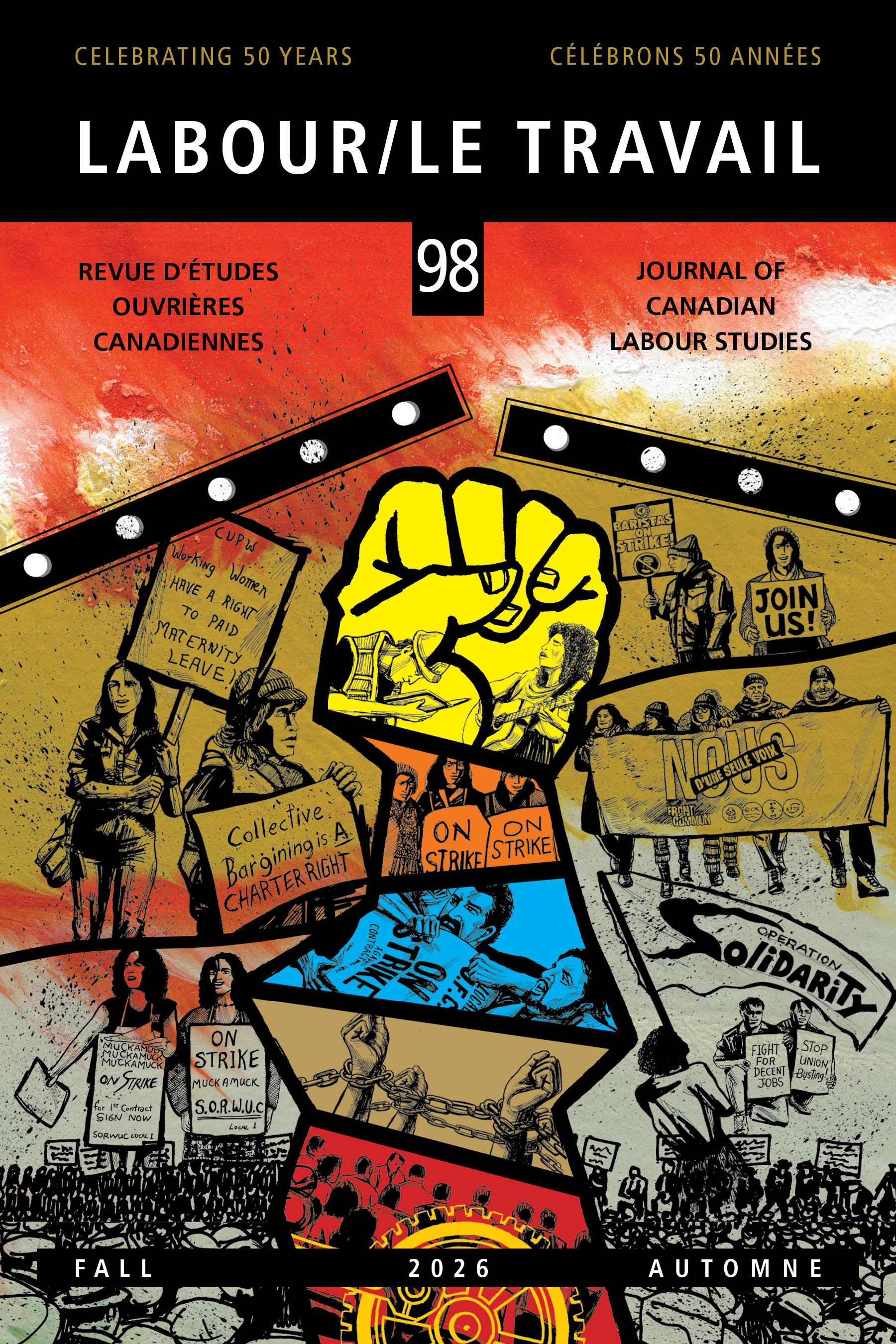
Published 2026-11-17
Keywords
- Labour/Le Travail,
- class relations,
- social history,
- historic compromise,
- neoliberalism
- workers’ control,
- gender,
- race ...More
How to Cite
Abstract
Labour/Le Travail has now been in publication for 50 years. During that period, its contributors have played an instrumental role in defining the ever-evolving fields of Canadian labour history and labour studies. This article demonstrates both continuities and changes in the journal’s emphasis in different periods. It attempts to explain shifts in the journal’s choice of topics and treatment of those topics within the context of changing conditions in society at large, the labour movement, and the universities. In the earliest years of the journal, at the tail end of the period of the historical compromise between capital and labour and with a young generation of labour scholars shaped by the New Left, there was a significant focus on going beyond class compromise to find precedents for working-class assertion of control over capital. As the 1980s progressed and capital’s success in gradually replacing welfare liberalism with neoliberalism became clear, journal articles focused more on the strategies of both capital and labour in various periods and why capital remained in the driver’s seat. In line with broader social changes and shifts within universities, the number of articles dealing with women’s struggles, Black and other non-white workers’ struggles, and Indigenous struggles increased as did, eventually, the number of articles dealing with environmental movements in a labour context.